
Nutrition myths rarely sound extreme and common nutrition Myths that are hurting your health is something that needs urgent attention.
They usually sound reasonable. Familiar. Even comforting.
Many of us grow up hearing certain food rules repeated by family members, social media, fitness influencers, or even outdated health advice. Over time, these ideas start to feel like facts, even when science has moved on.
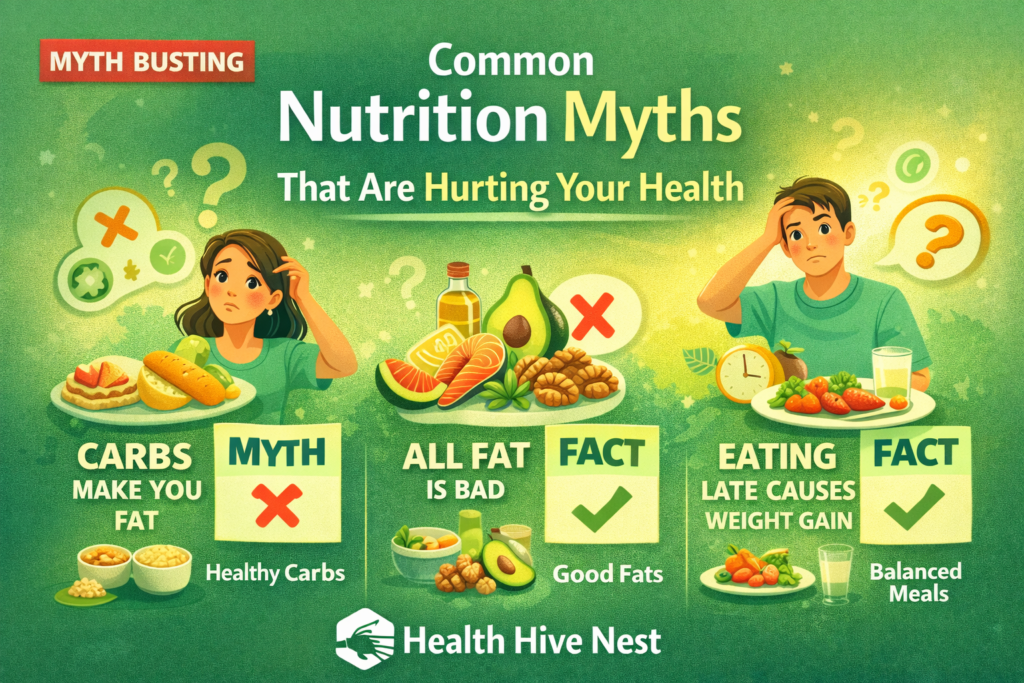
The problem is not confusion. The problem is confidence in the wrong information.
According to the National Institutes of Health, long-term health is shaped not by single meals but by consistent dietary patterns. When those patterns are based on myths, they can quietly increase the risk of nutrient deficiencies, metabolic problems, and chronic disease.
Source: National Institutes of Health (NIH)
https://www.nih.gov
This article breaks down the most common nutrition myths, explains why they persist, and replaces them with clear, evidence-based understanding you can actually use.
Myth 1: Carbohydrates Are Bad for You
This is one of the most damaging nutrition myths in modern health culture.
Carbohydrates are not the enemy. Your brain, muscles, and nervous system rely on glucose as their primary fuel source.
The real issue is carbohydrate quality, not carbohydrates themselves.
What science says
Whole-food carbohydrates such as:
- Fruits
- Vegetables
- Beans and lentils
- Whole grains
are consistently linked to better heart health, improved digestion, and lower risk of type 2 diabetes.
Highly refined carbohydrates, such as white bread, pastries, and sugary drinks, are the ones associated with blood sugar spikes and metabolic stress.
Harvard School of Public Health confirms that diets rich in whole carbohydrates support long-term health and longevity.
Source: Harvard T.H. Chan School of Public Health
https://www.hsph.harvard.edu
Myth 2: Eating Fat Makes You Fat
This belief emerged decades ago and still shapes many food choices today.
Body fat gain is not caused by dietary fat alone. It is influenced by overall calorie intake, food quality, hormonal balance, and lifestyle factors.
What science says
Healthy fats play essential roles in:
- Hormone production
- Brain function
- Vitamin absorption
- Cell structure
Sources of healthy fats include:
- Olive oil
- Avocados
- Nuts and seeds
- Fatty fish
The American Heart Association states that replacing saturated fats with unsaturated fats can reduce the risk of heart disease.
Source: American Heart Association
https://www.heart.org
Myth 3: Skipping Meals Helps With Weight Loss
Skipping meals often feels like discipline, but the body interprets it differently.
When meals are skipped regularly:
- Blood sugar drops
- Stress hormones rise
- Hunger hormones increase
This often leads to overeating later in the day and a disrupted relationship with food.
What science says
Regular, balanced meals help regulate appetite, energy levels, and metabolism.
The Mayo Clinic emphasizes that consistent meal timing supports sustainable weight management.
Source: Mayo Clinic
https://www.mayoclinic.org
Myth 4: All Processed Foods Are Unhealthy
This myth oversimplifies a complex topic.
Processing exists on a spectrum.
Some processing improves safety, shelf life, and accessibility. Other forms remove nutrients and add harmful ingredients.
Healthier processed foods include:
- Frozen vegetables
- Canned beans (low sodium)
- Plain yogurt
- Fortified whole-grain cereals
Less healthy ultra-processed foods include:
- Sugary snacks
- Processed meats
- Sweetened beverages
- Ready-to-eat fast foods
The World Health Organization links high intake of ultra-processed foods with increased risk of obesity and heart disease.
Source: World Health Organization (WHO)
https://www.who.int
Myth 5: Supplements Can Replace a Healthy Diet
Supplements are often marketed as shortcuts.
But they are designed to supplement, not replace, food.
Whole foods contain complex nutrient combinations that supplements cannot replicate.
What science says
Most people benefit more from improving food quality than from taking multiple supplements.
The National Institutes of Health warns that unnecessary supplementation can sometimes cause harm, especially at high doses.
Source: NIH Office of Dietary Supplements
https://ods.od.nih.gov
Myth 6: Eating Late at Night Automatically Causes Weight Gain
This myth ignores how the body actually works.
Weight gain depends on total calorie intake and food quality, not the clock.
What science says
Late-night eating becomes problematic when it involves:
- Highly processed foods
- Mindless snacking
- Poor sleep patterns
The NHS explains that irregular eating patterns combined with poor sleep can affect metabolism, but timing alone is not the main issue.
Source: NHS
https://www.nhs.uk
Myth 7: Natural Sugar Is Always Healthy
Sugar from fruit behaves very differently from added sugar, but that does not mean it is unlimited.
Whole fruits contain fiber, which slows sugar absorption. Fruit juices and sweeteners do not offer the same benefit.
What science says
The CDC advises limiting added sugars while encouraging whole fruit consumption as part of a balanced diet.
Source: CDC
https://www.cdc.gov
Why These Myths Persist
Nutrition myths survive because they are:
- Simple
- Emotionally appealing
- Easy to market
But health is rarely simple. It is built through patterns, consistency, and flexibility, not rigid rules.
What You Should Focus On Instead
Rather than chasing nutrition rules, focus on principles.
Helpful principles include:
- Eating mostly whole, minimally processed foods
- Including protein, fiber, and healthy fats at meals
- Listening to hunger and fullness cues
- Allowing flexibility without guilt
According to the CDC, sustainable dietary patterns are far more effective than restrictive approaches.
Source: CDC
https://www.cdc.gov
When to Seek Professional Nutrition Advice
Consider speaking with a healthcare provider or registered dietitian if you:
- Have a chronic medical condition
- Experience digestive discomfort
- Feel confused by conflicting advice
- Are considering major dietary changes
Professional guidance ensures nutrition advice fits your individual health needs.
Frequently Asked Questions
Are carbs really necessary for good health?
Yes. Carbohydrates provide the primary energy source for the brain and muscles. Whole carbohydrates support long-term health.
Is fat-free food healthier?
Not always. Many fat-free products contain added sugars and refined starches.
Can supplements improve my diet?
They can help correct deficiencies but should not replace balanced meals.
Is breakfast really important?
It depends on the individual, but regular meals help stabilize blood sugar and appetite.
Are detox diets effective?
There is no strong evidence supporting detox diets. The liver and kidneys already detoxify the body.
Source: Mayo Clinic
https://www.mayoclinic.org
Is eating organic always better?
Organic foods reduce pesticide exposure but are not nutritionally superior in all cases.
Source: NIH
https://www.nih.gov
Do calories matter more than food quality?
Both matter, but food quality strongly affects hunger, hormones, and long-term health.
Can I eat sugar and still be healthy?
Yes, in moderation. The focus should be on limiting added sugars.
Is snacking bad for you?
Snacking can be helpful if it includes nutrient-dense foods.
Should everyone follow the same diet?
No. Nutrition needs vary by age, health status, and lifestyle.
Conclusion: Nutrition Is About Understanding, Not Fear
Nutrition myths thrive on fear and oversimplification.
Good health comes from understanding how food works in the body, not from following rigid rules or trends.
By letting go of outdated myths and focusing on evidence-based habits, you give your body what it actually needs to function well for years to come.
At Health Hive Nest, our goal is clarity, not confusion — and science, not trends.
If this article helped clear up nutrition confusion, share it with someone who feels overwhelmed by food advice. Subscribe to Health Hive Nest for reliable, evidence-based health guidance you can trust.