
How to build a sustainable healthy eating routine is a question many people ask after trying—and quitting—countless diets. Keto, detoxes, meal plans that work for two weeks and collapse the moment life gets busy. Sound familiar?
The problem isn’t willpower. It’s sustainability.
Real healthy eating isn’t rigid, perfect, or short-term. It’s flexible. It adapts to your schedule, culture, budget, and preferences. Most importantly, it’s something you can maintain even on stressful days—not just when motivation is high.
This guide focuses on how to build a sustainable healthy eating routine that supports long-term health without burnout, guilt, or extremes.
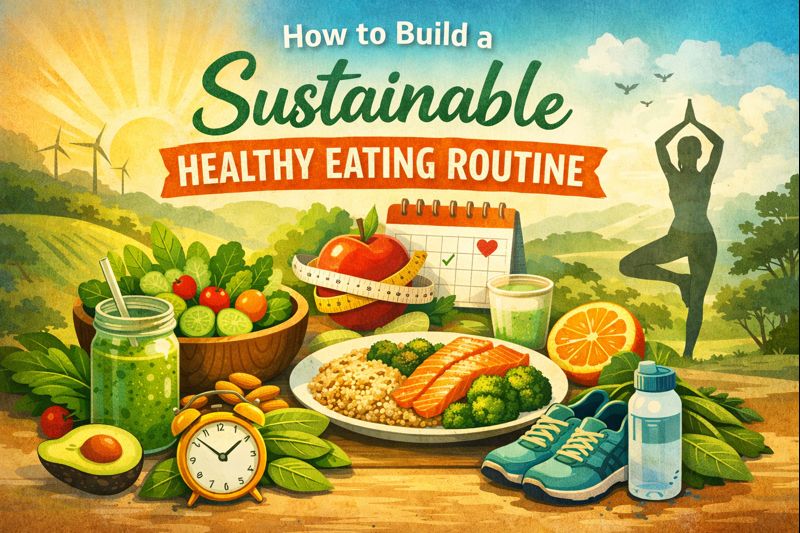
What “Sustainable Healthy Eating” Actually Means
A sustainable eating routine is one you can follow consistently for months and years—not days.
It means:
- Eating well most of the time, not all the time
- Choosing foods that nourish and satisfy
- Adjusting habits as life changes
According to the World Health Organization (WHO), long-term dietary patterns—not short-term diets—have the greatest impact on health outcomes
👉 https://www.who.int
Why Consistency Matters More Than Perfection
Many people quit healthy eating because they believe one “bad” meal means failure. In reality, health is shaped by patterns, not isolated choices.
Missing a workout or eating dessert doesn’t undo progress. What matters is returning to supportive habits the next day.
This mindset shift is essential when learning how to build a sustainable healthy eating routine.
How to Build a Sustainable Healthy Eating Routine (Step-by-Step)
1. Start With Small, Realistic Changes
Big changes look impressive—but small ones last.
Instead of:
- Completely cutting out sugar
- Cooking every meal from scratch
- Overhauling your pantry overnight
Try:
- Adding one vegetable to daily meals
- Drinking more water
- Replacing one processed snack with a whole food
Evidence:
The CDC supports gradual dietary changes for long-term success
👉 https://www.cdc.gov/nutrition
2. Build Meals Around Simple Foundations
Healthy meals don’t need to be complicated. Most balanced meals include:
- A source of protein
- Fiber-rich carbohydrates
- Healthy fats
- Fruits or vegetables
This approach keeps blood sugar stable and supports energy throughout the day.
3. Eat for Satisfaction, Not Just Calories
Restriction leads to rebound eating. Satisfaction prevents it.
A sustainable routine includes foods you genuinely enjoy. Flavor, texture, and fullness all matter.
According to Harvard Health, satisfaction plays a key role in long-term dietary adherence
👉 https://www.health.harvard.edu
4. Plan Lightly—Not Rigidly
Planning helps. Over-planning overwhelms.
Sustainable planning looks like:
- Keeping staple foods at home
- Repeating simple meals
- Knowing a few go-to options
It does not mean tracking every bite or following strict meal schedules.
Common Barriers to Healthy Eating (and How to Overcome Them)
Busy Schedules
Solution: Keep quick, nutritious options available.
Examples:
- Eggs
- Yogurt
- Frozen vegetables
- Canned beans
Emotional Eating
Solution: Address stress without judgment.
Food is often used for comfort. Awareness—not restriction—is the first step.
Budget Concerns
Solution: Focus on affordable nutrient-dense foods.
- Rice, oats, lentils
- Seasonal produce
- Frozen fruits and vegetables
The NHS confirms healthy eating can be affordable with proper planning
👉 https://www.nhs.uk
Building Healthy Eating Into Real Life
Eating Out Without Guilt
- Balance meals across the day
- Focus on portion awareness
- Enjoy social meals without stress
Traveling or Busy Periods
A sustainable routine bends—it doesn’t break.
During busy weeks:
- Aim for “good enough” meals
- Prioritize hydration and protein
- Resume normal habits afterward
Evidence-Based Nutrition Principles to Follow
Focus on Whole Foods
Whole foods naturally regulate appetite and nutrient intake.
Limit Ultra-Processed Foods
Excessive processed food intake is linked to inflammation and chronic disease.
Evidence:
NIH research associates ultra-processed diets with poorer health outcomes
👉 https://www.nih.gov
Stay Hydrated
Dehydration often mimics hunger and fatigue.
Preventive Care Benefits of a Sustainable Eating Routine
Consistent healthy eating supports:
- Heart health
- Stable blood sugar
- Digestive health
- Immune function
- Healthy weight maintenance
Preventive nutrition reduces long-term disease risk, according to WHO.
When to Seek Professional Guidance
Consider seeing a healthcare provider or dietitian if:
- You struggle with restrictive eating patterns
- You have chronic health conditions
- You experience unexplained weight changes
- You feel overwhelmed by food choices
Professional guidance supports personalized, safe nutrition planning.
Frequently Asked Questions (FAQs)
1. What does sustainable healthy eating really mean?
It means eating in a way you can maintain long term without stress or restriction.
2. Do I need to give up my favorite foods?
No. Sustainability includes enjoyment and flexibility.
3. Is meal prep necessary?
Helpful, but not required. Simple planning is often enough
4. Can I eat healthy without cooking much?
Yes. Many nutritious foods require minimal preparation.
5. How long does it take to form a routine?
Most habits take weeks to months to feel natural.
6. Is healthy eating expensive?
Not necessarily. Whole staples are often budget-friendly.
7. What if I fall off track?
Return to your routine at the next meal—no punishment needed.
8. Should I track calories?
Not required for most people. Awareness matters more than tracking.
9. Can sustainable eating help with weight management?
Yes. It supports natural appetite regulation.
10. Is consistency more important than perfection?
Absolutely. Consistency drives long-term results.
Conclusion: Healthy Eating That Fits Your Life
Learning how to build a sustainable healthy eating routine isn’t about doing everything right—it’s about doing what’s realistic, repeatable, and supportive of your health.
When food choices align with your lifestyle, healthy eating stops feeling like effort and starts feeling normal.
If this guide helped you rethink healthy eating, share it with someone who’s tired of dieting, and subscribe to Health Hive Nest for evidence-based nutrition guidance designed for real life.