
A Tool That Shapes How We Think and Feel
How social media affects mental health is a question that has become increasingly important as digital platforms become woven into daily life. For many people, checking social media is the first thing they do in the morning and the last thing they do before bed. It’s how we connect with friends, follow news, find entertainment, and even learn about health.
Yet alongside its benefits, social media has been linked to rising levels of anxiety, stress, loneliness, and emotional exhaustion. Some people feel inspired and connected after scrolling, while others feel inadequate, overwhelmed, or mentally drained.
The reality is that social media is neither entirely good nor entirely harmful. Its impact on mental health depends on how it is used, how often it is used, and how it interacts with an individual’s emotional well-being, personality, and life circumstances.
This article explores how social media influences mental health, the science behind its effects, who may be most vulnerable, and how to develop a healthier relationship with digital platforms—without fear, judgment, or exaggeration.
Understanding Social Media in Modern Life
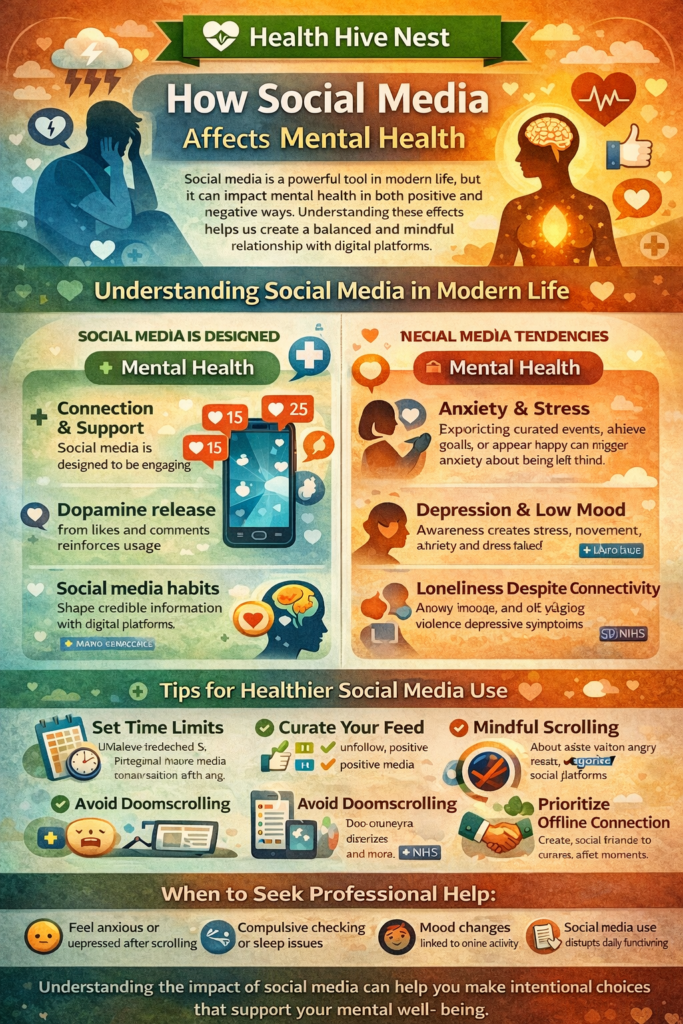
Social media platforms are designed to keep users engaged. Features such as likes, comments, notifications, and endless scrolling activate reward pathways in the brain.
According to research published by the National Institutes of Health (NIH), social interaction and feedback stimulate dopamine release, reinforcing repeated behaviors.
https://www.nih.gov
This means social media doesn’t just inform or entertain—it shapes habits, attention, and emotional responses.
The Psychological Mechanisms Behind Social Media Use
The Brain’s Reward System
Each notification or “like” can create a small dopamine response, reinforcing the desire to check again.
Over time, this can lead to compulsive usage patterns, even when scrolling no longer feels enjoyable.
Social Comparison
Humans naturally compare themselves to others. Social media intensifies this tendency by presenting curated highlights of other people’s lives.
The American Psychological Association (APA) explains that frequent social comparison is linked to lower self-esteem and increased depressive symptoms.
https://www.apa.org
Fear of Missing Out (FOMO)
Seeing others attend events, achieve goals, or appear happy can trigger anxiety about being left behind.
FOMO is associated with increased stress, sleep disruption, and dissatisfaction with life.
Positive Ways Social Media Can Support Mental Health
While much focus is placed on risks, social media can offer real mental health benefits when used intentionally.
Social Connection and Belonging
For people who feel isolated due to location, illness, or life transitions, social media provides a sense of connection.
Support groups, online communities, and shared-interest spaces help people feel understood and less alone.
The World Health Organization (WHO) recognizes social connection as a protective factor for mental health.
https://www.who.int
Mental Health Awareness and Education
Social media has helped normalize conversations around anxiety, depression, burnout, and emotional well-being.
Many people report seeking help earlier because they recognized symptoms through shared experiences online.
Emotional Expression and Creativity
Creative outlets such as writing, photography, art, and storytelling allow emotional expression and stress relief.
Sharing experiences can feel validating and empowering when done safely.
Access to Resources
Mental health organizations, therapists, and public health institutions use social media to share credible information and crisis resources.
The CDC uses digital platforms to promote mental health awareness and prevention.
https://www.cdc.gov/mentalhealth
Negative Effects of Social Media on Mental Health
Despite its benefits, excessive or unhealthy social media use can contribute to emotional distress.
Increased Anxiety and Stress
Constant exposure to news, opinions, and social expectations can overload the nervous system.
Notifications and alerts interrupt focus and prevent mental rest.
The Mayo Clinic notes that chronic stress contributes to anxiety and physical health problems.
https://www.mayoclinic.org
Depression and Low Mood
Studies have found associations between heavy social media use and increased depressive symptoms, particularly among adolescents and young adults.
Passive scrolling—consuming content without interaction—has been linked to lower mood and increased loneliness.
Loneliness Despite Connectivity
Ironically, increased online interaction can replace meaningful in-person connections, leading to emotional isolation.
The NIMH highlights loneliness as a significant mental health risk factor.
https://www.nimh.nih.gov
Body Image and Self-Esteem Issues
Filtered images and unrealistic beauty standards can distort self-perception.
This is especially impactful for teenagers and young adults, who are still developing identity and self-worth.
Sleep Disruption
Late-night scrolling interferes with sleep quality.
Blue light exposure and emotional stimulation delay melatonin release, affecting sleep cycles.
The NHS links poor sleep to mood disorders and emotional instability.
https://www.nhs.uk
How Social Media Affects Different Age Groups
Children and Adolescents
Young people are particularly sensitive to social feedback and peer approval.
Risks include:
- Cyberbullying
- Academic distraction
- Identity confusion
- Emotional sensitivity
The CDC reports rising mental health challenges among youth, with social media as a contributing factor.
https://www.cdc.gov
Young Adults
This group often experiences pressure related to success, appearance, and relationships.
Comparing life milestones—careers, finances, relationships—can intensify anxiety and self-doubt.
Adults
Adults may experience burnout, stress, or information overload.
Balancing work, family, and digital engagement becomes challenging when boundaries are unclear.
Older Adults
For older adults, social media can reduce isolation and improve mental stimulation.
However, misinformation and digital overwhelm can increase anxiety if not managed carefully.
Social Media, Stress, and Emotional Regulation
Constant Stimulation
The brain needs periods of rest to process emotions.
Continuous scrolling reduces opportunities for reflection and emotional regulation.
Emotional Contagion
Emotions spread quickly online.
Exposure to anger, fear, or negativity can influence mood—even without conscious awareness.
Research published in PubMed supports the concept of emotional contagion through digital platforms.
https://pubmed.ncbi.nlm.nih.gov
Social Media and Mental Health Conditions
Social media does not directly cause mental illness, but it can worsen existing vulnerabilities.
Anxiety Disorders
Constant comparison and information overload can intensify anxious thinking.
Depression
Negative feedback loops, isolation, and reduced real-world interaction can worsen depressive symptoms.
Eating Disorders and Body Dysmorphia
Exposure to idealized body images is associated with disordered eating behaviors.
The NIH highlights media influence as a risk factor for body image issues.
https://www.nih.gov
Warning Signs of Unhealthy Social Media Use
Signs may include:
- Feeling anxious after scrolling
- Compulsive checking
- Difficulty concentrating
- Sleep disruption
- Mood changes linked to online activity
Recognizing these signs early allows healthier adjustments.
Evidence-Based Strategies for Healthier Social Media Use
Set Clear Time Boundaries
Limiting daily usage reduces emotional fatigue.
Using built-in screen time tools helps create awareness.
Curate Your Feed
Unfollow or mute accounts that trigger stress or comparison.
Follow content that educates, uplifts, or aligns with values.
Practice Mindful Engagement
Ask yourself:
- Why am I opening this app?
- How does this content make me feel?
Intentional use improves emotional outcomes.
Avoid Doomscrolling
Constant exposure to negative news increases anxiety.
Setting limits around news consumption protects mental health.
Prioritize Offline Connection
In-person interactions strengthen emotional resilience and reduce loneliness.
Preventive Care for Digital Well-Being
Digital Detox Periods
Taking regular breaks helps reset emotional balance.
Even short breaks improve focus and mood.
Balanced Lifestyle Habits
Adequate sleep, movement, nutrition, and stress management reduce vulnerability to digital stress.
Open Conversations
Talking openly about social media pressure reduces stigma and isolation.
When to Seek Professional Help
Professional support is recommended if:
- Social media use feels uncontrollable
- Mood changes persist
- Anxiety or depression worsens
- Sleep and daily functioning decline
Mental health professionals can help address underlying issues and develop coping strategies.
Frequently Asked Questions (FAQs)
1. How social media affects mental health the most?
It affects mood, self-esteem, stress levels, and emotional regulation.
2. Is social media always harmful?
No. Its impact depends on usage patterns and individual vulnerability.
3. Can social media increase anxiety?
Yes. Especially through comparison, FOMO, and information overload.
4. Does social media cause depression?
It does not directly cause it, but can worsen symptoms.
5. How much social media is too much?
It varies, but emotional distress is a key indicator.
6. Can quitting social media improve mental health?
Many people report improved mood after reducing use.
7. Does social media affect sleep?
Yes. Especially when used before bedtime.
8. Are teenagers more affected?
Yes. Adolescents are more emotionally sensitive to social feedback.
9. Can social media support mental health recovery?
Yes. Through education, support groups, and awareness.
10. When should someone seek professional help?
If social media use significantly affects mental well-being or daily life.
Conclusion: Building a Healthier Digital Relationship
Understanding how social media affects mental health allows people to make informed, balanced choices rather than feeling controlled by technology. Social media is a tool—it can connect, educate, and inspire, but it can also drain emotional energy when used without boundaries.
Mental well-being improves when social media use is intentional, mindful, and balanced with real-world connection and self-care.
If this article helped you better understand your relationship with social media, share it with someone who may benefit, and subscribe to Health Hive Nest for trusted, evidence-based guidance on mental wellness, lifestyle balance, and preventive health.