
Sleep Is Not Optional—It’s Essential
The long-term effects of poor sleep often develop quietly, making them easy to ignore in the early stages. Many people treat sleep as flexible—something to sacrifice for work, entertainment, or productivity. Missing a few hours here and there may not seem harmful, especially in a busy world that rewards constant activity.
But sleep is not a luxury. It is a biological necessity that supports nearly every system in the body. When sleep is consistently disrupted or shortened, the consequences extend far beyond feeling tired the next day. Over time, poor sleep can affect mood, memory, immunity, metabolism, heart health, and even life expectancy.
Modern research continues to confirm what the body has always known: sleep is foundational to long-term health. Understanding how sleep works and what happens when it is neglected empowers people to protect their well-being before serious problems develop.
What Happens During Sleep
Sleep is an active, complex process—not a passive state of rest.
While sleeping, the body performs essential maintenance tasks that cannot happen efficiently while awake.
According to the National Institute of Neurological Disorders and Stroke, sleep supports brain function, emotional regulation, immune activity, and physical repair.
https://www.ninds.nih.gov
The Stages of Sleep and Their Roles
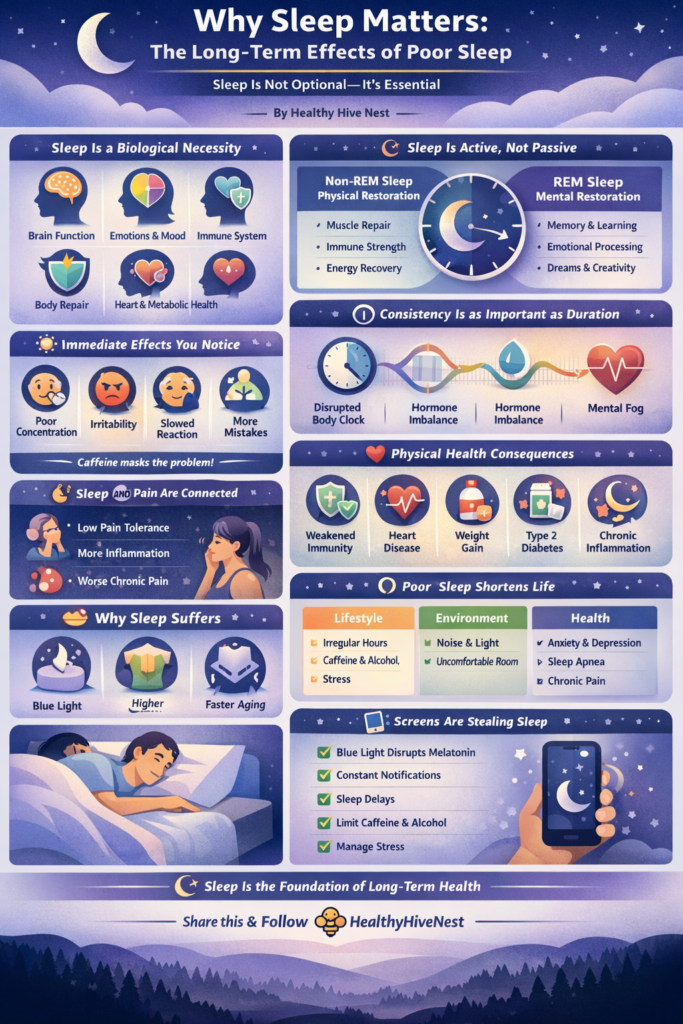
Sleep occurs in repeating cycles, each lasting about 90 minutes.
Non-REM Sleep
This stage supports:
- Physical repair
- Muscle growth
- Immune function
- Energy restoration
Deep non-REM sleep is particularly important for physical recovery.
REM Sleep
REM sleep supports:
- Memory consolidation
- Emotional processing
- Learning and creativity
Dreaming primarily occurs during this stage.
Disruptions in either stage interfere with the body’s ability to function optimally.
Why Consistent Sleep Matters
Sleep quality matters just as much as sleep duration.
Irregular sleep schedules—such as sleeping late on weekends or rotating shifts—disrupt the body’s internal clock, known as the circadian rhythm.
The National Institute of General Medical Sciences explains that circadian rhythm disruption affects hormone balance, metabolism, and mental clarity.
https://www.nigms.nih.gov
Short-Term Effects of Poor Sleep
In the short term, poor sleep affects daily performance and emotional stability.
These effects often include:
- Reduced concentration
- Irritability
- Slower reaction time
- Increased mistakes
- Low motivation
Many people rely on caffeine to compensate, masking symptoms without addressing the underlying problem.
Long-Term Effects of Poor Sleep on Mental Health
Increased Risk of Anxiety Disorders
Chronic sleep deprivation heightens emotional reactivity and stress sensitivity.
The brain becomes less effective at regulating fear and worry, increasing anxiety symptoms.
The American Psychological Association (APA) links insufficient sleep to heightened anxiety and stress disorders.
https://www.apa.org
Depression and Mood Disorders
Sleep and mood are deeply interconnected.
Persistent poor sleep increases the risk of depression, while depression further disrupts sleep—creating a harmful cycle.
The National Institute of Mental Health (NIMH) identifies sleep disturbance as both a symptom and a risk factor for depression.
https://www.nimh.nih.gov
Cognitive Decline and Memory Problems
Sleep supports learning, focus, and memory consolidation.
Long-term sleep deprivation impairs:
- Attention
- Decision-making
- Problem-solving
- Long-term memory
Over time, chronic sleep loss may contribute to cognitive decline.
Long-Term Effects of Poor Sleep on Physical Health
Weakened Immune System
Sleep supports immune response and infection defense.
People who consistently sleep poorly are more vulnerable to:
- Frequent colds
- Longer recovery times
- Increased inflammation
The CDC confirms sleep deprivation weakens immune defenses.
https://www.cdc.gov
Cardiovascular Disease
Poor sleep increases the risk of:
- High blood pressure
- Heart disease
- Stroke
Sleep deprivation keeps stress hormones elevated, placing strain on blood vessels and the heart.
The American Heart Association recognizes sleep as a critical component of heart health.
https://www.heart.org
Metabolic Disorders and Weight Gain
Sleep regulates hormones that control hunger and fullness.
Poor sleep disrupts:
- Ghrelin (hunger hormone)
- Leptin (satiety hormone)
This imbalance increases appetite and cravings for high-calorie foods.
The NIH links chronic sleep deprivation to obesity and insulin resistance.
https://www.nih.gov
Increased Risk of Type 2 Diabetes
Sleep deprivation reduces insulin sensitivity, making it harder for the body to regulate blood sugar.
Long-term poor sleep significantly increases diabetes risk.
Hormonal Imbalance
Sleep affects hormones related to:
- Stress
- Growth
- Reproduction
- Metabolism
Disrupted sleep alters hormone release, affecting energy, mood, and physical recovery.
Poor Sleep and Chronic Pain
Sleep and pain influence each other.
Poor sleep lowers pain tolerance and increases inflammation, worsening chronic pain conditions.
The Mayo Clinic confirms that sleep deprivation intensifies pain perception.
https://www.mayoclinic.org
Effects on Longevity and Overall Health
Long-term poor sleep is associated with increased mortality risk.
Studies published in PubMed show that consistently sleeping too little or too much is linked to higher rates of chronic illness and early death.
https://pubmed.ncbi.nlm.nih.gov
Common Causes of Poor Sleep
Lifestyle Factors
- Irregular schedules
- Excessive screen time
- Caffeine or alcohol use
- High stress levels
Environmental Factors
- Noise
- Light exposure
- Uncomfortable sleep environment
Medical and Mental Health Conditions
- Anxiety
- Depression
- Sleep apnea
- Chronic pain
Identifying causes is essential for long-term improvement.
The Role of Technology and Modern Life
Blue light from screens suppresses melatonin production, delaying sleep onset.
Social media and constant notifications increase mental stimulation, making it harder to unwind.
The NHS warns that screen exposure before bed negatively affects sleep quality.
https://www.nhs.uk
Preventive Care: Building Healthy Sleep Habits
Establish a Consistent Sleep Schedule
Going to bed and waking up at the same time supports circadian rhythm stability.
Create a Sleep-Friendly Environment
Helpful adjustments include:
- Dark, quiet rooms
- Comfortable bedding
- Cool temperatures
Develop a Wind-Down Routine
Calming activities before bed help signal the body to rest.
Examples:
- Reading
- Gentle stretching
- Relaxation breathing
Limit Stimulants
Avoid caffeine and alcohol close to bedtime.
Manage Stress
Stress reduction techniques such as mindfulness, journaling, or therapy improve sleep quality.
When to See a Doctor
Professional support is recommended if:
- Sleep problems persist for weeks
- Daytime functioning is impaired
- Loud snoring or breathing pauses occur
- Mood changes worsen
Sleep disorders are treatable with proper guidance.
Frequently Asked Questions (FAQs)
1. How many hours of sleep do adults need?
Most adults need 7–9 hours per night.
2. Can poor sleep really affect long-term health?
Yes. Chronic sleep deprivation increases disease risk.
3. Does sleep affect mental health?
Strongly. Sleep and emotional regulation are closely linked.
4. Is sleeping in on weekends helpful?
Occasionally, but irregular schedules can disrupt rhythm.
5. Can poor sleep cause weight gain?
Yes. Hormonal disruption affects appetite and metabolism.
6. Does napping help compensate for poor sleep?
Short naps may help, but they don’t replace quality night sleep.
7. Is insomnia a medical condition?
Yes. Chronic insomnia requires professional evaluation.
8. Can exercise improve sleep?
Yes. Regular activity supports better sleep quality.
9. Does screen time really affect sleep?
Yes. Blue light delays melatonin release.
10. When should sleep issues be taken seriously?
When they persist, worsen, or affect daily life.
Conclusion: Sleep Is the Foundation of Long-Term Health
Understanding the long-term effects of poor sleep highlights an essential truth—sleep is not something to “catch up on later.” It is a daily investment in mental clarity, emotional balance, physical resilience, and long-term health.
Protecting sleep today helps prevent serious health consequences tomorrow.
If this article helped you understand why sleep matters, share it with someone who struggles with sleep, and subscribe to Health Hive Nest for trusted, evidence-based guidance on building healthier habits that support lifelong well-being.