
Why Natural Sleep Matters More Than Ever
Healthy sleep habits for better rest naturally are becoming increasingly important in a world where sleepless nights are often normalized. Many people struggle with falling asleep, staying asleep, or waking up feeling refreshed—and instead of addressing the root causes, they turn to caffeine during the day and sleep aids at night.
While occasional sleep disturbances are normal, ongoing poor sleep is not something the body simply “gets used to.” Quality sleep is essential for brain function, emotional regulation, immune strength, metabolism, and long-term health. When sleep problems persist, they quietly affect nearly every system in the body.
The good news is that better sleep does not always require medication or drastic interventions. In many cases, consistent, natural sleep habits can restore the body’s ability to rest deeply and wake up refreshed. This article explains how sleep works, what interferes with it, and how to build healthy sleep habits that support better rest naturally and sustainably.
Understanding How Sleep Works
Sleep is a complex biological process, not just a period of inactivity. While the body rests, the brain and internal systems remain highly active.
According to the National Institute of Neurological Disorders and Stroke, sleep supports memory consolidation, emotional processing, immune regulation, and physical repair.
https://www.ninds.nih.gov
The Body’s Natural Sleep-Wake Cycle
The sleep-wake cycle, also known as the circadian rhythm, is an internal clock that regulates when the body feels alert or sleepy.
This rhythm is influenced by:
- Light exposure
- Hormone release (especially melatonin)
- Daily routines
- Meal timing
When this cycle is disrupted, falling asleep and staying asleep becomes more difficult.
The National Institute of General Medical Sciences explains that circadian rhythm disruption affects mood, metabolism, and cognitive function.
https://www.nigms.nih.gov
Why Natural Sleep Is Better Than Forced Sleep
Sleep medications can be helpful in certain medical situations, but they do not always replicate natural sleep patterns.
Natural sleep allows the body to move through all sleep stages—light sleep, deep sleep, and REM sleep—without interruption. These stages are essential for physical restoration and emotional balance.
Developing healthy sleep habits supports long-term sleep quality without dependence on external aids.
Common Causes of Poor Sleep
Understanding what interferes with sleep is the first step toward improving it naturally.
Lifestyle Factors
- Irregular sleep schedules
- Excessive screen time
- Late caffeine intake
- High stress levels
- Skipping physical activity
Environmental Factors
- Noise
- Artificial light
- Uncomfortable bedding
- Temperature extremes
Mental and Emotional Factors
- Anxiety
- Racing thoughts
- Emotional stress
- Unresolved worries
The Mayo Clinic confirms that stress and environment significantly affect sleep quality.
https://www.mayoclinic.org
The Foundation of Healthy Sleep Habits
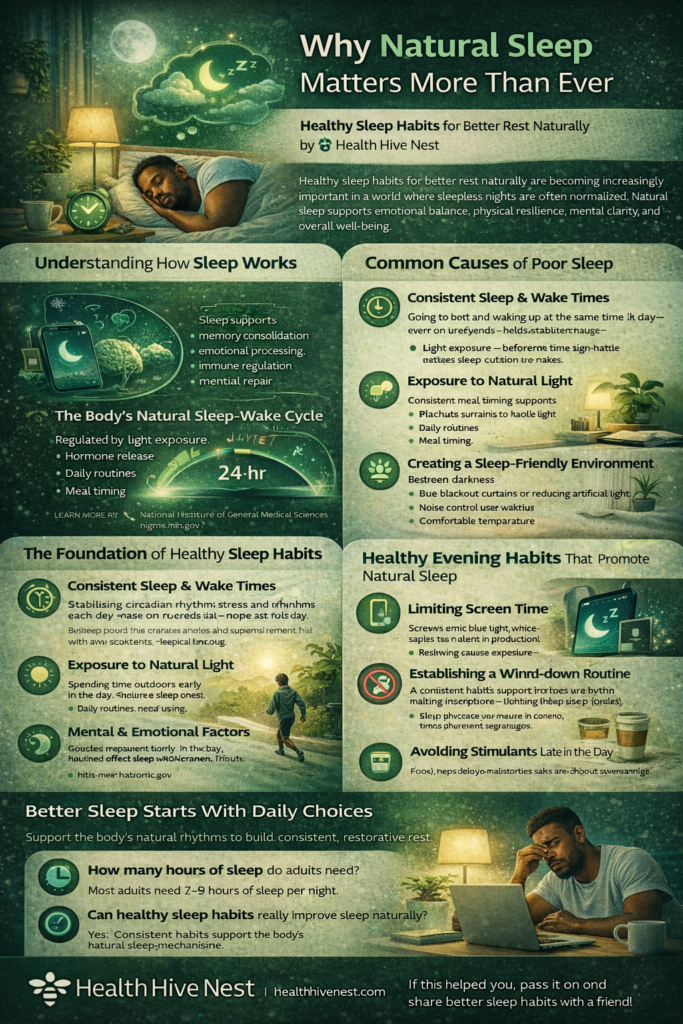
Consistent Sleep and Wake Times
Going to bed and waking up at the same time each day—even on weekends—helps stabilize the circadian rhythm.
Inconsistent schedules confuse the brain, making it harder to feel sleepy at night and alert in the morning.
Exposure to Natural Light
Morning sunlight helps reset the internal clock.
Spending time outdoors early in the day supports melatonin regulation and improves nighttime sleep.
The National Institute of Mental Health (NIMH) highlights the role of light exposure in sleep and mood regulation.
https://www.nimh.nih.gov
Creating a Sleep-Friendly Environment
Bedroom Darkness
Darkness signals the brain to release melatonin.
Using blackout curtains or reducing artificial light improves sleep onset and depth.
Noise Control
Even low-level noise can disrupt sleep cycles.
White noise machines or earplugs can help reduce disturbances.
Comfortable Temperature
A slightly cool room supports better sleep.
The NHS recommends maintaining a cool, comfortable sleeping environment.
https://www.nhs.uk
Healthy Evening Habits That Promote Natural Sleep
Limiting Screen Time
Screens emit blue light, which suppresses melatonin production. Reducing screen exposure at least one hour before bed supports natural sleepiness.
Establishing a Wind-Down Routine
A consistent pre-sleep routine signals the body that it’s time to rest.
Examples include:
- Reading
- Gentle stretching
- Relaxation breathing
- Light journaling
Avoiding Stimulants Late in the Day
Caffeine can remain in the body for hours. Avoiding caffeine after early afternoon improves nighttime sleep quality.
Nutrition Habits That Support Better Sleep
Eating Balanced Meals
Stable blood sugar levels support uninterrupted sleep. Large, heavy meals close to bedtime can cause discomfort and disrupt rest.
Limiting Alcohol
While alcohol may cause drowsiness initially, it disrupts deeper sleep stages.
The CDC confirms alcohol negatively affects sleep quality.
https://www.cdc.gov
Staying Hydrated—But Not Too Late
Adequate hydration supports overall health, but excessive fluids late at night can disrupt sleep due to frequent awakenings.
Physical Activity and Sleep Quality
Regular physical activity supports natural sleep regulation.
Exercise helps:
- Reduce stress
- Improve mood
- Regulate circadian rhythm
The American Psychological Association (APA) supports exercise as a natural sleep aid.
https://www.apa.org
Timing matters—moderate exercise earlier in the day is ideal for sleep support.
Managing Stress for Better Sleep
Calming the Nervous System
Chronic stress keeps the body in a state of alertness.
Relaxation techniques such as deep breathing or mindfulness help shift the body into a restful state.
Journaling to Reduce Racing Thoughts
Writing down worries or tasks before bed helps clear the mind.
Example: Making a simple to-do list for the next day can reduce nighttime rumination.
Emotional Processing
Unresolved emotions often surface at night.
Talking with a trusted person or practicing self-reflection supports emotional release and better sleep.
Natural Daytime Habits That Improve Nighttime Sleep
Limiting Long Daytime Naps
Short naps can be helpful, but long or late naps reduce nighttime sleep drive.
Maintaining a Regular Eating Schedule
Consistent meal timing supports circadian rhythm stability.
Avoiding Excessive Evening Stimulation
Overstimulating activities late at night delay sleep onset.
Preventive Care: Protecting Sleep Long-Term
Listening to Early Warning Signs
Persistent fatigue, irritability, or difficulty concentrating may signal sleep issues.
Addressing these signs early prevents long-term consequences.
Building Sleep Habits Gradually
Small changes are more sustainable than drastic overnight adjustments.
Consistency matters more than perfection.
When to See a Doctor
Professional evaluation is recommended if:
- Sleep problems persist for several weeks
- Loud snoring or breathing pauses occur
- Daytime functioning is impaired
- Mood changes worsen
Sleep disorders such as insomnia or sleep apnea are treatable with proper care.
Frequently Asked Questions (FAQs)
1. How many hours of sleep do adults need?
Most adults need 7–9 hours of sleep per night.
2. Can healthy sleep habits really improve sleep naturally?
Yes. Consistent habits support the body’s natural sleep mechanisms.
3. Is it normal to wake up at night?
Occasional awakenings are normal, but frequent disruptions may signal an issue.
4. Does screen time affect sleep quality?
Yes. Blue light delays melatonin production.
5. Can exercise help with sleep?
Yes. Regular activity improves sleep quality.
6. Does stress cause insomnia?
Chronic stress is a common contributor to sleep difficulties.
7. Is alcohol helpful for sleep?
No. Alcohol disrupts deep sleep stages.
8. Can naps replace nighttime sleep?
No. Naps cannot fully compensate for poor nighttime sleep.
9. How long does it take to improve sleep naturally?
Improvements often appear within weeks of consistent habits.
10. When should sleep problems be taken seriously?
When they persist, worsen, or affect daily life.
Better Sleep Starts With Daily Choices
Building healthy sleep habits for better rest naturally is one of the most powerful investments a person can make in long-term health. Sleep supports emotional balance, physical resilience, mental clarity, and overall well-being.
Rather than forcing sleep with quick fixes, supporting the body’s natural rhythms creates sustainable, restorative rest.
If this article helped you understand how to sleep better naturally, share it with someone who struggles with sleep, and subscribe to Health Hive Nest for evidence-based guidance on building healthier habits for lifelong wellness.