
When Poor Sleep Is More Than Just a Bad Night
Many people brush off sleep problems as part of modern life. Late nights, early mornings, stress, and screen time have made exhaustion feel almost normal. But persistent sleep issues are not something the body simply adapts to without consequences.
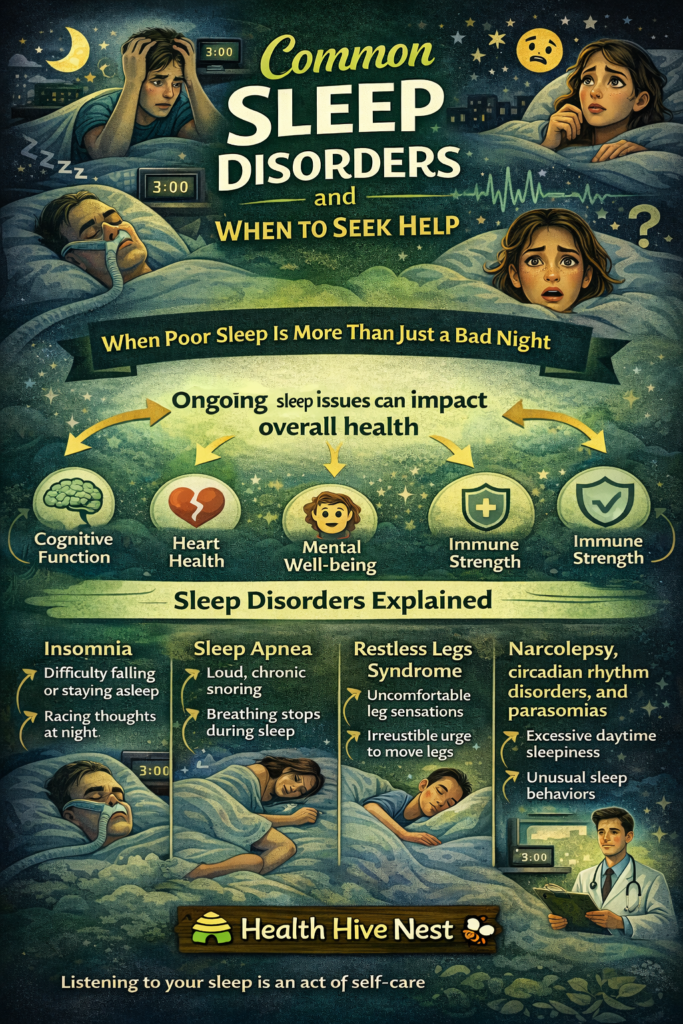
Understanding common sleep disorders and when to seek help is essential because ongoing sleep disruption affects far more than energy levels. Sleep plays a critical role in brain function, emotional regulation, immune strength, heart health, metabolism, and mental well-being.
Occasional sleepless nights happen to everyone. However, when sleep problems become frequent, intense, or start interfering with daily life, they may indicate an underlying sleep disorder that deserves attention.
This article explains the most common sleep disorders, their symptoms, causes, and when professional support is necessary—using clear language, real-life examples, and science-backed information.
Why Sleep Disorders Matter
Sleep is not a luxury. It is a biological necessity.
According to the Centers for Disease Control and Prevention (CDC), chronic sleep deprivation is linked to heart disease, diabetes, depression, obesity, and impaired cognitive performance.
https://www.cdc.gov/sleep
Sleep disorders disrupt the body’s ability to move through healthy sleep stages, preventing physical repair, memory consolidation, and emotional processing.
Ignoring sleep problems does not make them go away—it often allows them to worsen over time.
What Is a Sleep Disorder?
A sleep disorder is a condition that affects the quality, timing, or duration of sleep and interferes with daytime functioning.
Sleep disorders may cause:
- Difficulty falling asleep
- Difficulty staying asleep
- Excessive daytime sleepiness
- Unusual behaviors during sleep
- Disrupted breathing at night
The National Institutes of Health (NIH) recognizes more than 80 different sleep disorders, ranging from mild to serious.
https://www.nhlbi.nih.gov
Insomnia: The Most Common Sleep Disorder
What Insomnia Looks Like
Insomnia is characterized by difficulty falling asleep, staying asleep, or waking up too early and not being able to return to sleep.
People with insomnia often experience:
- Racing thoughts at night
- Frequent awakenings
- Unrefreshing sleep
- Daytime fatigue
- Irritability or low mood
Causes of Insomnia
Insomnia can be short-term or chronic.
Common causes include:
- Stress and anxiety
- Irregular sleep schedules
- Poor sleep habits
- Caffeine or alcohol use
- Chronic pain or illness
The Mayo Clinic notes that insomnia is often linked to mental health conditions such as anxiety and depression.
https://www.mayoclinic.org
When Insomnia Becomes a Concern
If sleep problems persist for three or more nights per week for several months, medical evaluation is recommended.
Sleep Apnea: A Serious but Often Overlooked Condition
What Sleep Apnea Is
Sleep apnea is a disorder where breathing repeatedly stops and starts during sleep.
The most common type is obstructive sleep apnea, caused by airway blockage.
Common Symptoms
- Loud, chronic snoring
- Gasping or choking during sleep
- Morning headaches
- Excessive daytime sleepiness
- Difficulty concentrating
Many people with sleep apnea are unaware they stop breathing at night and only learn about it through a partner.
Health Risks of Untreated Sleep Apnea
Untreated sleep apnea increases the risk of:
- High blood pressure
- Heart disease
- Stroke
- Type 2 diabetes
The American Academy of Sleep Medicine emphasizes early diagnosis and treatment.
https://aasm.org
When to Seek Help
Anyone who snores loudly and experiences daytime fatigue should seek medical evaluation.
Restless Legs Syndrome (RLS)
What Restless Legs Syndrome Feels Like
RLS causes uncomfortable sensations in the legs and an irresistible urge to move them, especially at night.
Symptoms often include:
- Tingling or crawling sensations
- Worsening symptoms at rest
- Temporary relief with movement
Possible Causes
RLS may be linked to:
- Iron deficiency
- Pregnancy
- Kidney disease
- Neurological conditions
The National Institute of Neurological Disorders and Stroke provides detailed guidance on RLS.
https://www.ninds.nih.gov
When RLS Needs Medical Attention
If symptoms interfere with sleep or quality of life, evaluation is advised.
Narcolepsy: Excessive Daytime Sleepiness
Understanding Narcolepsy
Narcolepsy is a neurological disorder that affects the brain’s ability to regulate sleep-wake cycles.
Key Symptoms
- Sudden sleep attacks
- Excessive daytime sleepiness
- Muscle weakness triggered by emotions
- Fragmented nighttime sleep
Why Narcolepsy Requires Professional Care
Narcolepsy can significantly affect safety, work performance, and mental health.
The NIH confirms that narcolepsy requires long-term medical management.
https://www.ninds.nih.gov
Circadian Rhythm Sleep Disorders
What Happens When the Internal Clock Is Disrupted
Circadian rhythm disorders occur when the body’s internal clock does not align with daily schedules.
Common examples include:
- Shift work sleep disorder
- Delayed sleep-wake phase disorder
- Jet lag disorder
Symptoms
- Difficulty falling asleep at conventional times
- Excessive daytime sleepiness
- Poor sleep quality
The Sleep Foundation highlights the impact of circadian misalignment on mental and physical health.
https://www.sleepfoundation.org
Parasomnias: Unusual Behaviors During Sleep
Types of Parasomnias
Parasomnias include:
- Sleepwalking
- Night terrors
- REM sleep behavior disorder
When Parasomnias Are Concerning
Occasional episodes may be harmless, but frequent or dangerous behaviors require evaluation.
Preventive Care: Reducing the Risk of Sleep Disorders
Protecting Sleep Health Early
Preventive strategies include:
- Maintaining consistent sleep schedules
- Managing stress
- Limiting caffeine and alcohol
- Creating a sleep-friendly environment
Recognizing Early Warning Signs
Early signs may include:
- Persistent fatigue
- Mood changes
- Memory problems
- Reduced motivation
When to Seek Medical Help for Sleep Problems
Medical evaluation is recommended if:
- Sleep problems persist for weeks or months
- Daytime functioning is affected
- Breathing problems occur during sleep
- Sleep behaviors become unsafe
- Mood or mental health worsens
Early intervention improves outcomes and prevents complications.
Frequently Asked Questions (FAQs)
1. How do I know if I have a sleep disorder?
Persistent sleep problems that affect daily life may indicate a disorder.
2. Is snoring always a sign of sleep apnea?
Not always, but loud, chronic snoring warrants evaluation.
3. Can stress alone cause sleep disorders?
Stress can trigger or worsen sleep problems but may not be the sole cause.
4. Are sleep disorders treatable?
Yes. Most sleep disorders respond well to proper treatment.
5. Can lifestyle changes improve sleep disorders?
Lifestyle changes often play a key role in management.
6. Is insomnia a mental health condition?
Insomnia is a sleep disorder but often overlaps with mental health issues.
7. Can children have sleep disorders?
Yes. Sleep disorders affect all age groups.
8. Do sleep disorders worsen with age?
Some become more common with age, but they are not inevitable.
9. Should I see a doctor for occasional poor sleep?
Occasional poor sleep is normal; persistent issues should be evaluated.
10. What type of doctor treats sleep disorders?
Primary care providers or sleep specialists can diagnose and manage sleep disorders.
Listening to Your Sleep Is an Act of Self-Care
Understanding common sleep disorders and when to seek help empowers individuals to take sleep seriously as a foundation of health. Persistent sleep problems are not a personal failure or something to simply endure.
Sleep disorders are common, manageable, and treatable—especially when addressed early.
If this article helped you recognize signs of a sleep disorder, share it with someone who may be struggling, and subscribe to Health Hive Nest for trusted, evidence-based guidance on building healthier habits for long-term wellness.