
Why Sleep and Mental Health Cannot Be Separated
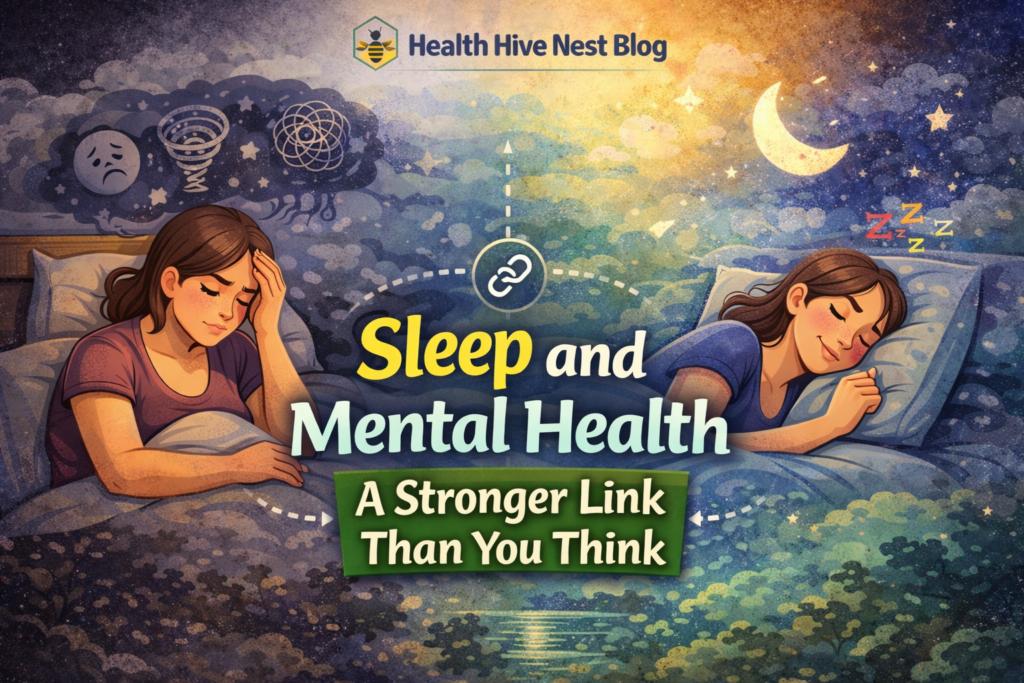
The sleep and mental health connection is often underestimated. Many people treat sleep as optional—something to sacrifice when life gets busy, stressful, or overwhelming. Mental health, on the other hand, is often discussed as a separate issue, influenced by emotions, trauma, or life circumstances.
In reality, sleep and mental health are deeply intertwined. One consistently affects the other in a powerful, two-way relationship. Poor sleep can worsen mental health, and mental health challenges can disrupt sleep. When this cycle continues unchecked, both physical and emotional well-being suffer.
If you have ever felt more anxious after a bad night’s sleep, emotionally fragile after several restless nights, or mentally foggy during periods of chronic exhaustion, you have experienced this connection firsthand.
This article explores how sleep influences mental health, how mental health affects sleep, what science says about this relationship, and what practical steps you can take to protect both—naturally and sustainably.
Why Sleep Is Essential for Mental Health
Sleep is not simply rest for the body; it is active maintenance for the brain.
During sleep, the brain:
- Processes emotions
- Regulates mood
- Consolidates memories
- Clears metabolic waste
- Resets stress response systems
According to the National Institute of Mental Health (NIMH), sleep plays a critical role in emotional regulation and psychological resilience.
https://www.nimh.nih.gov
When sleep is consistently disrupted, the brain struggles to manage stress, emotions, and decision-making.
How the Brain Uses Sleep to Regulate Emotions
During deep and REM sleep, the brain processes emotional experiences from the day. This helps reduce emotional intensity and prevents overwhelming reactions.
Without adequate sleep:
- Emotional responses become exaggerated
- Negative thoughts feel heavier
- Stress feels harder to manage
The American Psychological Association (APA) confirms that sleep deprivation reduces emotional control and increases vulnerability to mood disorders.
https://www.apa.org
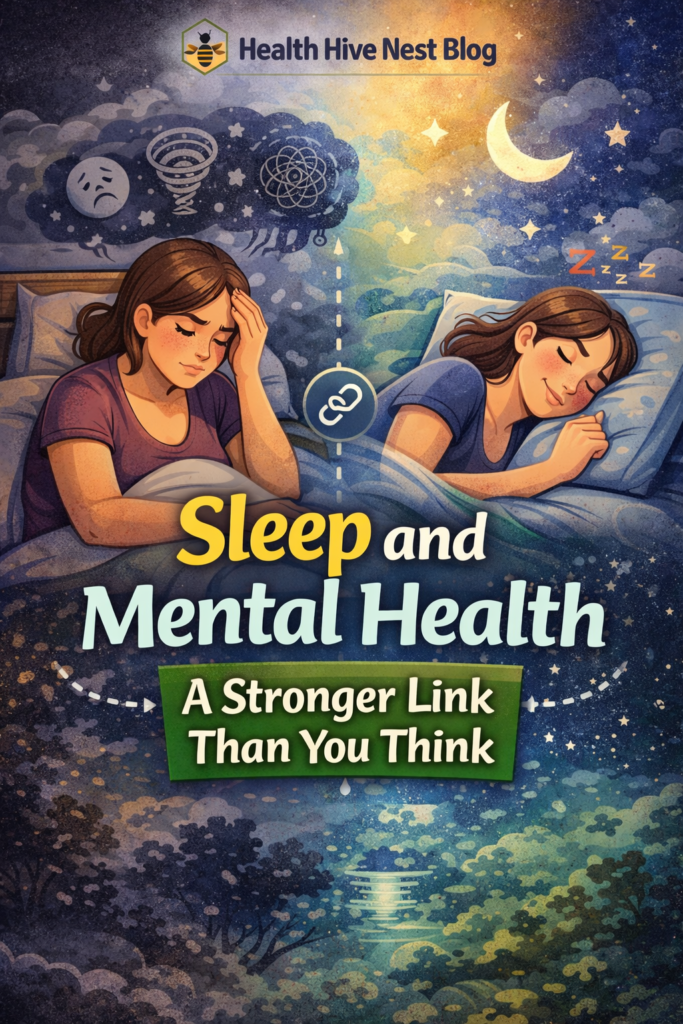
The Two-Way Relationship Between Sleep and Mental Health
The sleep and mental health connection works in both directions.
Poor sleep can contribute to mental health conditions, while mental health conditions often disrupt sleep. This creates a feedback loop that can be difficult to break without awareness and intervention.
How Poor Sleep Affects Mental Health
Increased Anxiety
Sleep deprivation activates the brain’s threat-detection system. This makes everyday situations feel more stressful and overwhelming.
People who are sleep-deprived often report:
- Racing thoughts
- Heightened worry
- Difficulty relaxing
- Increased irritability
Research from Harvard Medical School shows that lack of sleep increases activity in the amygdala, the brain’s fear center.
https://www.health.harvard.edu
Worsening Depression
Sleep disturbances are one of the most common symptoms of depression—and also a contributing factor.
Poor sleep affects:
- Mood stability
- Motivation
- Energy levels
- Pleasure response
The National Institutes of Health (NIH) notes that chronic insomnia increases the risk of developing depression.
https://www.nhlbi.nih.gov
Reduced Stress Tolerance
Sleep supports the body’s stress-regulation system. Without it, cortisol levels remain elevated.
This can lead to:
- Emotional exhaustion
- Burnout
- Difficulty coping with daily challenges
Impaired Cognitive Function
Sleep deprivation affects concentration, memory, and decision-making.
This mental fog can increase frustration, lower confidence, and contribute to feelings of helplessness or low self-worth.
How Mental Health Conditions Disrupt Sleep
Anxiety and Sleep
Anxiety often keeps the brain in a state of hyperarousal.
Common sleep challenges include:
- Difficulty falling asleep
- Frequent awakenings
- Light, unrefreshing sleep
Racing thoughts and physical tension make relaxation difficult.
Depression and Sleep
Depression can cause:
- Insomnia
- Oversleeping
- Irregular sleep patterns
Sleep quality often remains poor even with extended time in bed.
Stress and Sleep
Chronic stress keeps the nervous system alert.
The body struggles to transition into rest mode, delaying sleep onset and fragmenting sleep cycles.
Sleep Disorders and Mental Health
Sleep disorders frequently coexist with mental health conditions.
Common examples include:
- Insomnia
- Sleep apnea
- Restless legs syndrome
- Circadian rhythm disorders
The CDC reports that people with mental health conditions are more likely to experience sleep disorders.
https://www.cdc.gov/sleep
The Role of REM Sleep in Emotional Balance
REM sleep is essential for emotional processing.
During REM sleep:
- Emotional memories are reorganized
- Stress responses are dampened
- Emotional resilience is restored
Reduced REM sleep is linked to mood instability and emotional reactivity.
Why Chronic Sleep Deprivation Is a Mental Health Risk
Occasional sleep loss happens. Chronic sleep deprivation is different.
Long-term sleep deprivation increases the risk of:
- Anxiety disorders
- Depression
- Mood instability
- Substance use
- Burnout
The World Health Organization (WHO) recognizes sleep as a key pillar of mental health.
https://www.who.int
Real-Life Example: Sleep and Emotional Resilience
Imagine two people facing the same stressful workday.
One is well-rested. The other slept poorly for several nights.
The well-rested person:
- Responds calmly
- Thinks clearly
- Recovers emotionally faster
The sleep-deprived person:
- Feels overwhelmed
- Reacts emotionally
- Struggles to focus
This difference is not a personality flaw—it is a biological response to sleep deprivation.
Preventive Care: Protecting Sleep to Support Mental Health
Prioritizing Consistent Sleep
Regular sleep schedules stabilize mood and emotional regulation.
Managing Stress Before Bed
Calming routines help the nervous system shift into rest mode.
Examples include:
- Deep breathing
- Gentle stretching
- Reading
- Journaling
Limiting Stimulants
Caffeine and nicotine increase nervous system arousal and interfere with sleep.
Creating a Mental Health-Friendly Sleep Environment
A calm, dark, quiet bedroom supports emotional decompression and relaxation.
When to Seek Professional Help
Professional support is recommended if:
- Sleep problems persist for weeks or months
- Anxiety or depression worsens
- Daytime functioning declines
- Thoughts feel overwhelming or intrusive
- Emotional distress interferes with daily life
Early intervention improves both sleep and mental health outcomes.
Treatment Approaches That Address Both Sleep and Mental Health
Cognitive Behavioral Therapy
CBT for insomnia and CBT for mental health conditions are highly effective.
The NHS recommends CBT-I as a first-line treatment for chronic insomnia.
https://www.nhs.uk
Lifestyle-Based Interventions
- Sleep hygiene
- Stress management
- Regular physical activity
- Emotional support
Medical Evaluation
In some cases, medical treatment may be necessary, especially for underlying sleep disorders.
Frequently Asked Questions (FAQs)
1. How strong is the sleep and mental health connection?
The connection is very strong and works in both directions.
2. Can poor sleep cause anxiety?
Yes. Sleep deprivation increases anxiety symptoms.
3. Does improving sleep help mental health?
Yes. Better sleep often improves mood and emotional resilience.
4. Is insomnia a mental health condition?
Insomnia is a sleep disorder but commonly overlaps with mental health issues.
5. Can depression affect sleep quality?
Yes. Depression often disrupts sleep patterns.
6. How much sleep supports good mental health?
Most adults need 7–9 hours per night.
7. Can stress alone disrupt sleep?
Yes. Chronic stress is a major sleep disruptor.
8. Should sleep problems be treated separately from mental health?
Ideally, both should be addressed together.
9. Can therapy improve sleep?
Yes. Therapy can improve both sleep and mental health.
10. When should I seek professional help?
When sleep or mental health issues persist or worsen.
Conclusion: Sleep Is Mental Health Care
The sleep and mental health connection is not optional—it is fundamental. Protecting sleep is one of the most effective, natural ways to support emotional balance, resilience, and long-term mental well-being.
Better sleep does not solve every challenge, but it strengthens the mind’s ability to cope, heal, and adapt.
If this article helped you understand the powerful link between sleep and mental health, share it with someone who may be struggling, and subscribe to Health Hive Nest for trusted, evidence-based guidance on building healthier habits for lifelong wellness.