Understanding fertility health and ovulation is essential for women who are trying to conceive or simply want to support a regular, healthy menstrual cycle. For many women, ovulation does not occur consistently, making pregnancy more challenging and cycle tracking confusing. Learning how to improve ovulation naturally can help restore balance, improve hormone regulation, and support overall reproductive well-being.
Ovulation is not just about fertility. It reflects how well your hormones, metabolism, stress levels, nutrition, and lifestyle are working together. When these systems are supported, ovulation becomes more predictable and healthier.
At Health Hive Nest, our mission is to provide clear, evidence-based health information that empowers women to make informed decisions about their bodies and long-term health.
https://healthhivenest.com/
Medical Disclaimer
The information provided by Health Hive Nest is for educational and informational purposes only and does not constitute medical advice. This content is not intended to diagnose, treat, cure, or prevent any medical condition. Always consult a qualified healthcare professional before making fertility or health-related decisions. Use of this information is at your own discretion and risk.
What Is Ovulation and Why It Matters for Fertility Health
Ovulation is the process in which one ovary releases a mature egg during each menstrual cycle. This egg travels through the fallopian tube, where fertilization may occur. If fertilization does not happen, the egg is absorbed by the body, and menstruation follows.
Understanding ovulation is the foundation of learning how to boost ovulation naturally. Ovulation is controlled by a delicate balance of hormones, including estrogen, progesterone, luteinizing hormone (LH), and follicle-stimulating hormone (FSH). When these hormones function properly, ovulation usually occurs once per cycle.
When hormonal balance is disrupted, ovulation may become irregular, delayed, or absent altogether. This is why fertility health depends heavily on overall hormonal and metabolic health.
A detailed medical explanation of ovulation is available from Mayo Clinic:
https://www.mayoclinic.org/diseases-conditions/infertility/in-depth/ovulation/art-20046845
The Ovulation Phase Explained
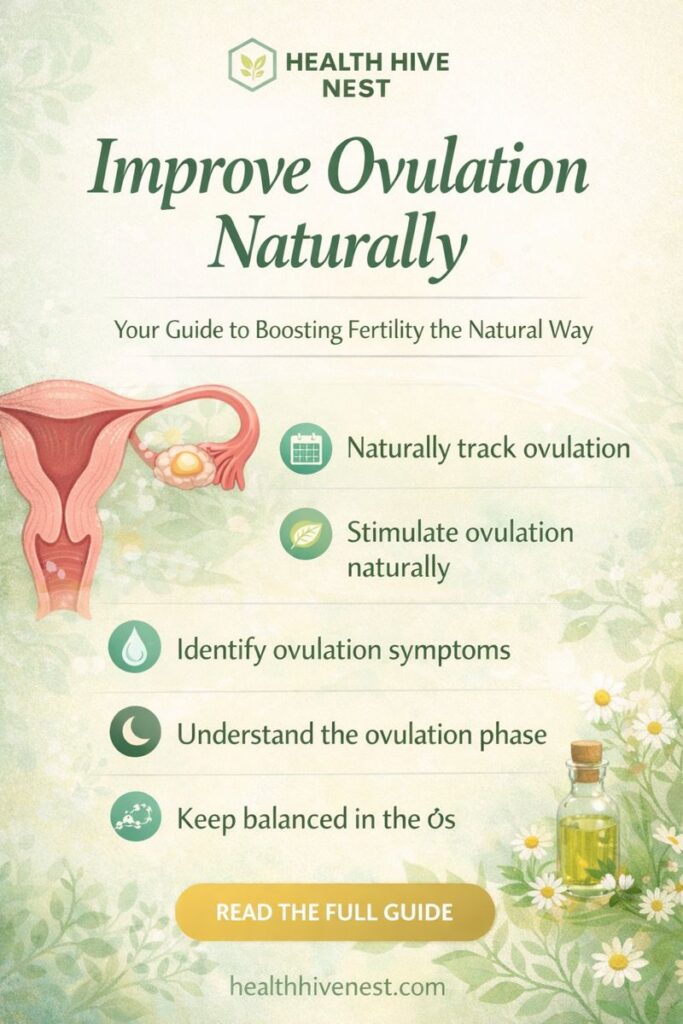
The ovulation phase is the short window during the menstrual cycle when pregnancy is possible. Ovulation typically occurs about 12–16 days before the next period, though timing can vary widely.
During this phase, the body prepares for potential conception by:
- Increasing cervical mucus
- Raising basal body temperature slightly
- Triggering hormonal signals that release the egg
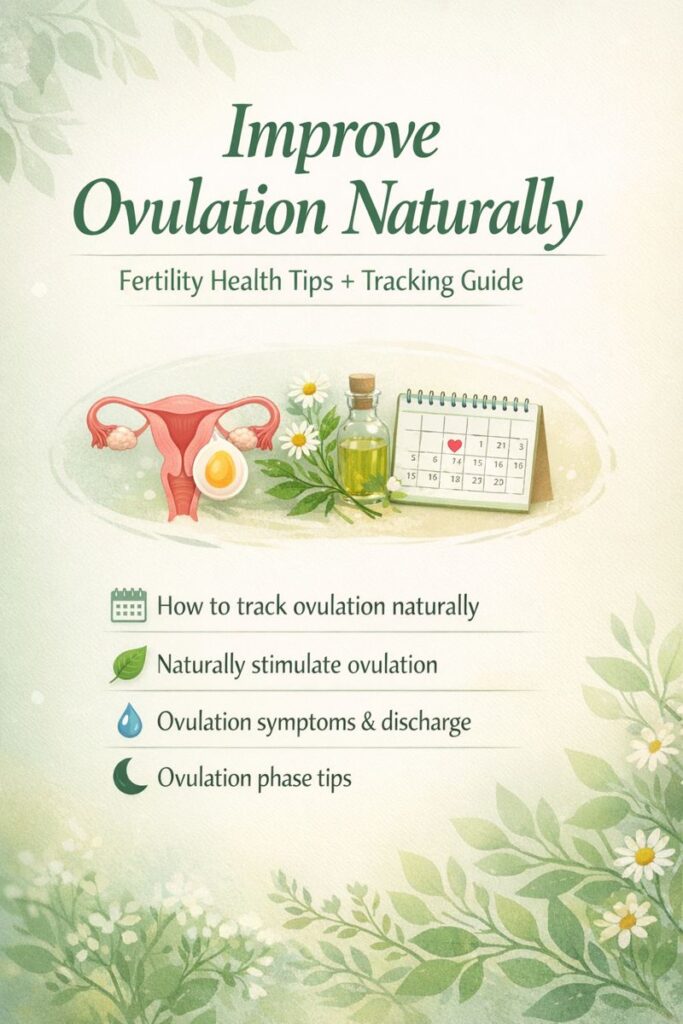
Understanding your ovulation phase is essential if you want to naturally track ovulation or improve fertility awareness.
Common Causes of Ovulation Problems
Before focusing on how to naturally stimulate ovulation, it’s important to understand why ovulation problems occur. In many cases, ovulation issues are caused by a combination of hormonal, lifestyle, and metabolic factors.
Common causes include:
- Hormonal imbalance
- Chronic stress
- Thyroid disorders
- Insulin resistance
- Poor nutrition
- Excessive exercise
- Rapid weight loss or gain
- Age-related hormone changes
Polycystic Ovary Syndrome (PCOS) is one of the most common medical conditions linked to irregular or absent ovulation.
The CDC explains PCOS and its impact on ovulation here:
https://www.cdc.gov/pcos/index.html
According to the National Institutes of Health, ovulatory disorders are a leading cause of female infertility:
https://www.nichd.nih.gov/health/topics/infertility/conditioninfo/causes
Ovulation Symptoms and Signs to Watch For
Recognizing ovulation symptoms helps many women identify whether ovulation is occurring regularly. Changes in the body often provide valuable clues.
Common ovulation symptoms include:
- Regular menstrual cycles
- Mild pelvic discomfort (mittelschmerz)
- Increased libido
- Breast tenderness
- Slight increase in basal body temperature
One of the most important signs is ovulation discharge, also known as fertile cervical mucus. This discharge often appears clear, slippery, and stretchy, similar to egg whites. Its presence helps sperm survive and travel more easily.
When ovulation discharge is minimal or absent, it may indicate hormonal imbalance or disrupted ovulation.
A helpful overview is available from the U.S. Office on Women’s Health:
https://www.womenshealth.gov/a-z-topics/ovulation
How to Naturally Track Ovulation
Learning how to naturally track ovulation improves fertility awareness and cycle understanding without relying solely on apps or medications.
Effective natural tracking methods include:
- Monitoring cervical mucus changes
- Tracking basal body temperature
- Observing cycle length patterns
- Noticing physical ovulation symptoms
Combining multiple tracking methods often provides the most accurate results and helps identify irregular ovulation patterns early.
Planned Parenthood offers an overview of ovulation tracking methods here:
https://www.plannedparenthood.org/learn/pregnancy/ovulation
Who Is Most at Risk for Ovulation Problems?
Certain factors increase the likelihood of ovulation difficulties. Identifying risk factors early can improve outcomes when learning how to improve ovulation naturally.
You may be at higher risk if you:
- Are over age 35
- Have PCOS or thyroid disease
- Experience chronic stress
- Have a history of eating disorders
- Follow extreme dieting habits
- Exercise excessively
- Have significant weight imbalance
The American College of Obstetricians and Gynecologists confirms that age and lifestyle strongly influence ovulation and fertility:
https://www.acog.org/womens-health/faqs/infertility
Evidence-Based Ways to Improve Ovulation Naturally
Many women can successfully boost ovulation naturally by supporting hormonal balance and overall health. These approaches are backed by scientific research and clinical observation.
Maintain a Healthy Weight
Even a 5–10% change in body weight can help restore ovulation in some women by improving hormone regulation.
https://www.nhs.uk/conditions/ovulation-disorders/
Eat a Fertility-Supportive Diet
A balanced diet rich in whole foods, healthy fats, lean protein, fruits, and vegetables supports reproductive hormones.
Harvard research highlights nutrition as a key factor in fertility health:
https://www.hsph.harvard.edu/nutritionsource/fertility-diet/
Manage Stress Effectively
Chronic stress increases cortisol levels, which can interfere with ovulation hormones and delay egg release.
https://www.health.harvard.edu/womens-health/stress-and-fertility
Prioritize Sleep and Lifestyle Balance
Adequate sleep, limiting alcohol and caffeine, and avoiding overtraining support healthier ovulation patterns.
When to See a Doctor
While natural approaches can be helpful, medical evaluation is sometimes necessary. Early care often improves long-term fertility outcomes.
Consult a healthcare provider if you:
- Miss periods for several months
- Have been trying to conceive for 12 months (or 6 months if over 35)
- Experience severe pelvic pain
- Suspect a hormonal or metabolic condition
Mayo Clinic guidance on infertility symptoms:
https://www.mayoclinic.org/diseases-conditions/infertility/symptoms-causes/syc-20354317
Frequently Asked Questions
Can lifestyle changes really help improve ovulation naturally?
Yes. Research shows that diet, stress reduction, sleep quality, and weight management can significantly support ovulation.
https://www.ncbi.nlm.nih.gov/pmc/articles/PMC5556599/
Can you ovulate without having a period?
It is possible but uncommon. Ovulation typically precedes menstruation.
https://www.nichd.nih.gov/health/topics/menstruation/conditioninfo
How long does ovulation last?
Ovulation lasts about 12–24 hours, but sperm can survive up to five days.
https://www.acog.org/womens-health/faqs/how-to-get-pregnant
Does age affect ovulation?
Yes. Ovulation becomes less regular with age, particularly after 35.
https://www.cdc.gov/reproductivehealth/infertility/index.htm
Conclusion
Fertility health and ovulation are closely connected to overall well-being. Learning how to improve ovulation naturally empowers women to understand their bodies, track cycles effectively, and make informed health decisions. While natural strategies can be highly effective, combining them with medical guidance when needed offers the best outcomes.
For more trusted, easy-to-understand health content, visit Health Hive Nest:
https://healthhivenest.com/