
Every parent wants the same thing—healthy, happy children who grow, learn, and thrive. Yet in the rush of school schedules, screen time battles, picky eating, and late bedtimes, the most powerful foundations of child health are often overlooked.
Nutrition. Sleep. Immunity.
These three pillars quietly influence everything from how often a child gets sick to how well they concentrate in school, regulate emotions, and grow physically. When one pillar weakens, the others feel it. When all three are supported, children don’t just survive—they flourish.
This guide from Health Hive Nest breaks down nutrition, sleep, and immunity for child health in a practical, science-backed, and parent-friendly way. No scare tactics. No miracle claims. Just evidence-based strategies you can use starting today.
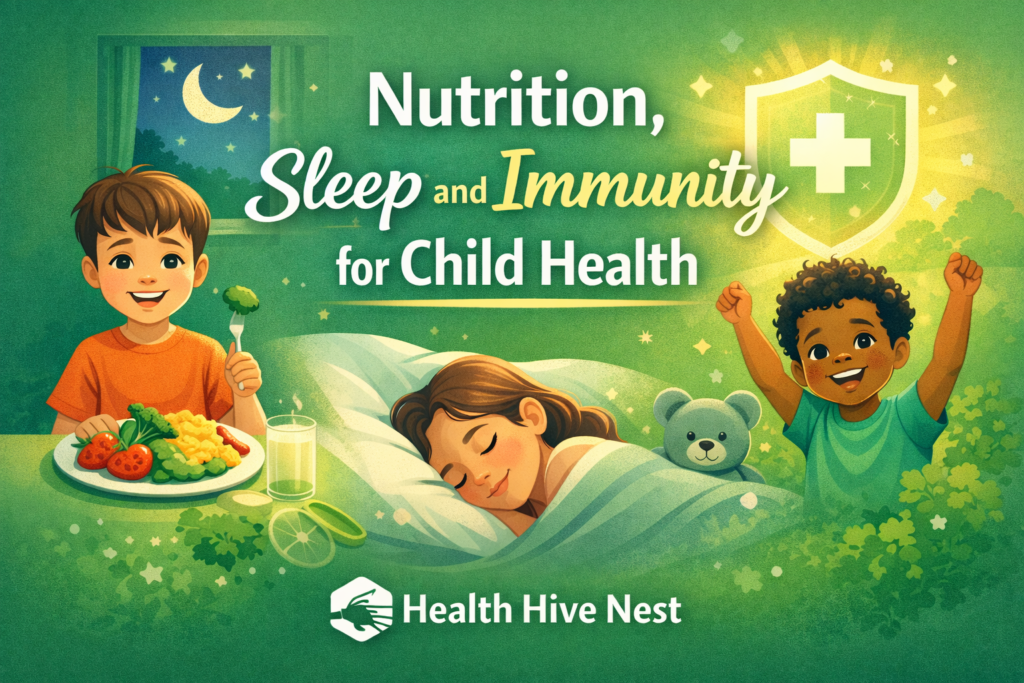
Why Nutrition, Sleep, and Immunity Are Deeply Connected
Children’s bodies are not miniature adult bodies. They grow rapidly, adapt constantly, and rely on daily habits to build strong systems.
Here’s how these pillars interact:
- Nutrition provides the raw materials—vitamins, minerals, protein, and energy.
- Sleep allows the body to repair tissues, regulate hormones, and strengthen immune memory.
- Immunity protects against infections while learning how to respond effectively.
According to the National Institutes of Health (NIH), immune development in childhood is highly sensitive to sleep patterns and nutrient intake
👉 https://www.nih.gov
A child who eats well but sleeps poorly may still get sick often. A child who sleeps well but lacks essential nutrients may struggle to fight infections. Balance is key.
PART 1: Nutrition — Fueling Growth and Immune Strength
How Nutrition Shapes Child Health and Immunity
Nutrition is not just about avoiding hunger—it’s about supplying the body with what it needs to build bones, produce immune cells, and support brain development.
The World Health Organization (WHO) emphasizes that proper childhood nutrition reduces infection risk and supports lifelong health
👉 https://www.who.int
Children who lack key nutrients may experience:
- Frequent colds and infections
- Slow growth
- Poor concentration
- Fatigue and irritability
Essential Nutrients for a Strong Immune System
1. Protein
Protein builds immune cells and antibodies.
Sources:
- Eggs
- Chicken, turkey
- Beans and lentils
- Greek yogurt
2. Vitamin C
Supports immune defense and wound healing.
Sources:
- Oranges, strawberries
- Bell peppers
- Broccoli
Evidence:
Mayo Clinic confirms vitamin C supports immune cell function
👉 https://www.mayoclinic.org
3. Vitamin D
Plays a critical role in immune regulation.
Sources:
- Fortified milk
- Fatty fish
- Safe sun exposure
CDC guidance on vitamin D for children
👉 https://www.cdc.gov
4. Zinc
Helps immune cells function properly.
Sources:
- Nuts and seeds
- Whole grains
- Lean meats
Building a Balanced Plate for Kids
A simple rule parents love: The Color Plate Method
Aim for:
- 🟢 Fruits & vegetables (half the plate)
- 🟠 Whole grains (¼ plate)
- 🔵 Protein (¼ plate)
- 🥛 Dairy or fortified alternatives
The NHS Eatwell Guide supports this approach for children
👉 https://www.nhs.uk
Handling Picky Eaters Without Stress
Picky eating is common and usually temporary.
Try this:
- Offer variety without pressure
- Pair new foods with familiar favorites
- Involve kids in food prep
- Be patient—research shows children may need 10–15 exposures to accept new foods
PART 2: Sleep — The Unsung Hero of Child Health
Why Sleep Is Non-Negotiable for Children
Sleep is when children’s bodies:
- Release growth hormone
- Strengthen immune memory
- Regulate emotions
- Consolidate learning
The American Academy of Pediatrics states that chronic sleep deprivation increases infection risk in children
👉 https://www.aap.org
Recommended Sleep Hours by Age
| Age Group | Recommended Sleep |
|---|---|
| Infants (4–12 months) | 12–16 hours |
| Toddlers (1–2 yrs) | 11–14 hours |
| Preschoolers (3–5 yrs) | 10–13 hours |
| School-age (6–12 yrs) | 9–12 hours |
| Teens (13–18 yrs) | 8–10 hours |
(Source: CDC)
👉 https://www.cdc.gov
Sleep and Immunity: What Science Shows
Studies published on PubMed show children who sleep less than recommended are more likely to catch viral infections
👉 https://pubmed.ncbi.nlm.nih.gov
During deep sleep:
- Immune cells communicate
- Inflammatory responses are regulated
- The body “remembers” pathogens
Creating a Child-Friendly Sleep Routine
A calming bedtime routine signals safety and consistency.
Try:
- Same bedtime daily
- Warm bath or shower
- Reading together
- No screens 1 hour before bed
WebMD confirms screen exposure delays melatonin release
👉 https://www.webmd.com
PART 3: Immunity — Protecting and Teaching the Body
Understanding a Child’s Immune System
Children aren’t “weak”—their immune systems are learning.
Each exposure teaches the immune system how to respond better next time. However, chronic stress, poor nutrition, and sleep deprivation interfere with this learning process.
Natural Ways to Support Child Immunity
1. Consistent Nutrition
Micronutrients matter daily, not just during illness.
2. Quality Sleep
Sleep loss weakens immune response within days.
3. Physical Activity
Movement boosts circulation and immune cell activity.
4. Hygiene Habits
- Handwashing
- Teaching cough etiquette
CDC hygiene guidance
👉 https://www.cdc.gov
Vaccinations: A Critical Preventive Tool
Vaccines safely train the immune system without causing disease.
WHO and CDC confirm vaccines are one of the most effective public health tools ever developed
👉 https://www.who.int
👉 https://www.cdc.gov
When to See a Doctor
Seek medical advice if your child experiences:
- Frequent infections (more than expected for age)
- Poor weight gain or growth delays
- Chronic fatigue
- Snoring or breathing issues during sleep
- Persistent fever
Always consult a pediatrician before supplements or major dietary changes.
Preventive Care Tips for Parents
- Schedule routine pediatric checkups
- Keep vaccinations up to date
- Encourage outdoor play
- Model healthy eating and sleep habits
- Limit ultra-processed foods
- Maintain a consistent bedtime routine
Frequently Asked Questions (FAQs)
1. How does nutrition affect a child’s immune system?
Nutrition provides the building blocks for immune cells. Deficiencies weaken immune response.
NIH source: https://www.nih.gov
2. Can lack of sleep really make kids sick?
Yes. Sleep deprivation reduces immune efficiency and increases infection risk.
CDC: https://www.cdc.gov
3. Do kids need supplements for immunity?
Most healthy children don’t if they eat balanced diets. Consult a doctor first.
Mayo Clinic: https://www.mayoclinic.org
4. Is sugar bad for immunity?
Excess sugar may suppress immune cell function temporarily. Moderation matters.
5. How much sleep is enough for school-age kids?
9–12 hours nightly.
CDC: https://www.cdc.gov
6. Can probiotics help immunity?
Some evidence suggests benefits, but results vary. Always seek medical advice.
PubMed: https://pubmed.ncbi.nlm.nih.gov
7. What foods boost immunity fastest?
No instant fix—consistent nutrition matters more than “superfoods.”
8. Does exercise improve immunity in children?
Yes. Regular moderate activity supports immune circulation.
9. When should I worry about frequent illness?
If infections are severe, persistent, or affect growth—see a doctor.
10. Are vaccines safe for children?
Yes. Extensive research confirms safety and effectiveness.
WHO: https://www.who.int
Conclusion: Small Daily Habits, Lifelong Impact
Supporting nutrition, sleep, and immunity for child health doesn’t require perfection—it requires consistency.
A balanced meal. A predictable bedtime. A walk outside. These small daily choices shape how children grow, learn, and defend themselves against illness for years to come.
At Health Hive Nest, we believe empowered parents build healthier futures—one habit at a time.