
Every parent wants their child to grow up healthy, strong, and emotionally secure. Yet with busy schedules, endless online advice, and rising health concerns, it’s easy to feel uncertain about what truly matters.
The reassuring truth is this: child health is built through simple, consistent habits—not perfection.
According to the World Health Organization (WHO) and the Centers for Disease Control and Prevention (CDC), most lifelong health outcomes are influenced by early nutrition, sleep, physical activity, emotional support, and preventive care. These factors don’t require expensive tools or complicated routines—just informed, intentional choices.
This guide covers essential child health tips every parent should know, using evidence-based recommendations, real-world examples, and practical steps you can apply immediately.
At Health Hive Nest, our goal is to support parents with calm, trustworthy guidance that stands the test of time.
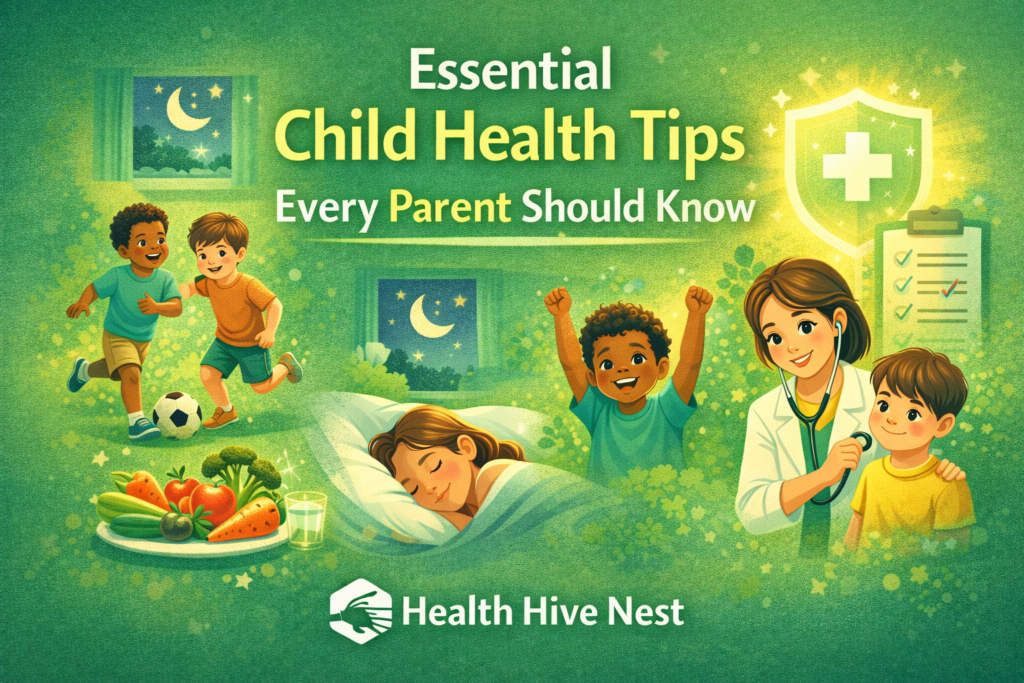
The Foundations of Healthy Child Development
Child health is not just about avoiding illness. It includes:
- Physical growth
- Brain development
- Emotional regulation
- Immune strength
- Social and behavioral skills
Authoritative sources:
- WHO Child Health: https://www.who.int/health-topics/child-health
- CDC Child Development: https://www.cdc.gov/ncbddd/childdevelopment
Healthy habits established early often continue into adulthood.
1. Balanced Nutrition: Fueling Growth and Development
Why nutrition matters in childhood
Children’s bodies and brains grow rapidly. Poor nutrition during childhood can affect learning, immunity, and long-term disease risk.
According to the American Academy of Pediatrics (AAP), children thrive on regular meals that include a variety of nutrients rather than restrictive diets.
Source: https://www.healthychildren.org
Essential nutrition tips for parents
- Offer fruits and vegetables daily
- Include whole grains and lean proteins
- Provide healthy fats (nuts, seeds, fish where appropriate)
- Avoid excessive sugary snacks and drinks
- Encourage water as the main beverage
Real-life example:
A child who eats balanced meals may still prefer certain foods. Consistency and exposure matter more than forcing bites.
2. Physical Activity: Movement Is Medicine for Children
How much activity do children need?
The WHO recommends at least 60 minutes of moderate to vigorous physical activity daily for children aged 5–17.
Source: https://www.who.int/news-room/fact-sheets/detail/physical-activity
Benefits of regular movement
- Strong bones and muscles
- Healthy weight
- Improved focus and mood
- Better sleep
Simple ways to encourage activity
- Outdoor play
- Walking or cycling
- Sports or dance
- Family activity time
Movement should be enjoyable, not a punishment.
3. Sleep: A Cornerstone of Child Health
Recommended sleep by age
According to the Sleep Foundation:
- Toddlers: 11–14 hours
- School-age children: 9–12 hours
- Teenagers: 8–10 hours
Source: https://www.sleepfoundation.org
Why sleep matters
Sleep supports:
- Brain development
- Emotional regulation
- Immune function
- Learning and memory
Sleep-supporting habits
- Consistent bedtime routines
- Screen-free time before bed
- Calm sleep environments
Sleep problems should not be ignored when they affect daily functioning.
4. Mental and Emotional Well-Being
Why emotional health is essential
Children’s emotional health influences their behavior, academic success, and social relationships.
According to the CDC, early emotional support reduces the risk of anxiety and depression later in life.
Source: https://www.cdc.gov/mentalhealth
Supporting emotional wellness
- Listen without judgment
- Validate feelings
- Encourage expression through play or conversation
- Maintain predictable routines
- Seek professional support when needed
A child who feels safe emotionally is more resilient.
5. Preventive Healthcare: Catching Problems Early
Essential preventive care
- Routine pediatric checkups
- Vaccinations
- Vision and hearing screenings
- Dental visits
- Growth and developmental monitoring
According to the U.S. Preventive Services Task Force, preventive care saves lives and reduces long-term healthcare costs.
Source: https://www.uspreventiveservicestaskforce.org
6. Hygiene and Illness Prevention
Simple hygiene habits that matter
- Handwashing before meals
- Proper tooth brushing
- Bathing regularly
- Covering coughs and sneezes
According to the CDC, proper hygiene significantly reduces the spread of infectious diseases in children.
Source: https://www.cdc.gov/handwashing
7. Screen Time and Digital Health
Why screen habits matter
Excessive screen use is linked to:
- Sleep disruption
- Reduced physical activity
- Attention difficulties
The AAP recommends age-appropriate limits and supervised screen use.
Source: https://www.aap.org
Healthy screen habits
- Set daily limits
- Avoid screens before bedtime
- Encourage offline play
- Co-view content when possible
Technology should support learning, not replace real-world interaction.
8. Building Strong Immunity Naturally
Evidence-based immunity support
According to the NIH, immune health depends on:
- Balanced nutrition
- Adequate sleep
- Physical activity
- Stress management
Source: https://www.niaid.nih.gov
Practical immunity-boosting tips
- Serve nutrient-dense meals
- Encourage regular sleep
- Keep vaccinations up to date
- Allow outdoor play
9. Safety at Home, School, and Play
Common safety risks
- Falls
- Burns
- Choking hazards
- Traffic accidents
The CDC emphasizes injury prevention as a key part of child health.
Source: https://www.cdc.gov/safechild
Simple safety measures
- Use age-appropriate safety gear
- Supervise young children closely
- Teach basic safety rules
- Child-proof the home
10. Teaching Healthy Habits by Example
Children learn more from what parents do than what they say.
Healthy behaviors to model:
- Balanced eating
- Regular movement
- Stress management
- Respect for mental health
- Seeking medical care when needed
Healthy parents raise healthier children.
When to See a Healthcare Professional
Contact a healthcare provider if your child experiences:
- Delayed developmental milestones
- Persistent fatigue
- Sudden behavior changes
- Ongoing sleep problems
- Unexplained weight changes
Early intervention leads to better outcomes.
Simple Daily Child Health Checklist for Parents
- Balanced meals
- At least 60 minutes of activity
- Adequate sleep
- Emotional check-ins
- Limited screen time
- Good hygiene
- Outdoor play
Consistency matters more than intensity.
Frequently Asked Questions (FAQ)
1. What are the most essential child health tips every parent should know?
Balanced nutrition, regular physical activity, adequate sleep, emotional support, and preventive care.
2. Do children need supplements?
Most children do not unless advised by a healthcare provider.
Source: https://ods.od.nih.gov
3. How much exercise should children get?
At least 60 minutes daily, according to the WHO.
4. Is picky eating a health concern?
Usually no. It’s common and improves with patience and exposure.
5. How can parents support mental health?
By listening, validating emotions, and seeking help early when needed.
6. Are vaccines safe for children?
Yes. Vaccines are rigorously tested and monitored.
Source: https://www.cdc.gov/vaccines
7. How important is sleep for learning?
Sleep is essential for memory, focus, and emotional regulation.
8. Should screen time be completely avoided?
No. It should be limited and age-appropriate.
9. When should children start routine health checkups?
From infancy, through regular pediatric visits.
10. What is the best first step for improving child health?
Start with consistent sleep routines and balanced meals.
Understanding essential child health tips every parent should know empowers families to build strong foundations for lifelong wellness. Health doesn’t come from doing everything perfectly—it grows from small, steady habits practiced every day.