
Have you ever wonder How Sleep and Stress Prevent Weight Loss or Have you ever followed a calorie-controlled diet, exercised regularly, and still wondered why the scale refuses to move? Do you feel exhausted, stressed, and frustrated despite “doing everything right” to lose weight? If this sounds familiar, you are not alone. Many adults struggle with weight loss without realizing that sleep and stress weight loss barriers may be working against them behind the scenes.
Research now shows that sleep and stress weight loss challenges are not minor issues—they are powerful biological factors that directly influence appetite, metabolism, fat storage, and motivation. When sleep is poor and stress is chronic, the body enters a survival mode that makes fat loss significantly harder, even with diet and exercise. Understanding how sleep and stress affect weight loss can help you finally break through plateaus and adopt healthier, more sustainable habits.
Medical Disclaimer:
This article is intended for educational and informational purposes only. It does not constitute medical advice and should not replace consultation with a qualified healthcare professional. Always seek the guidance of your physician or another licensed health provider before making changes to your diet, lifestyle, sleep habits, stress management practices, or weight loss plan.
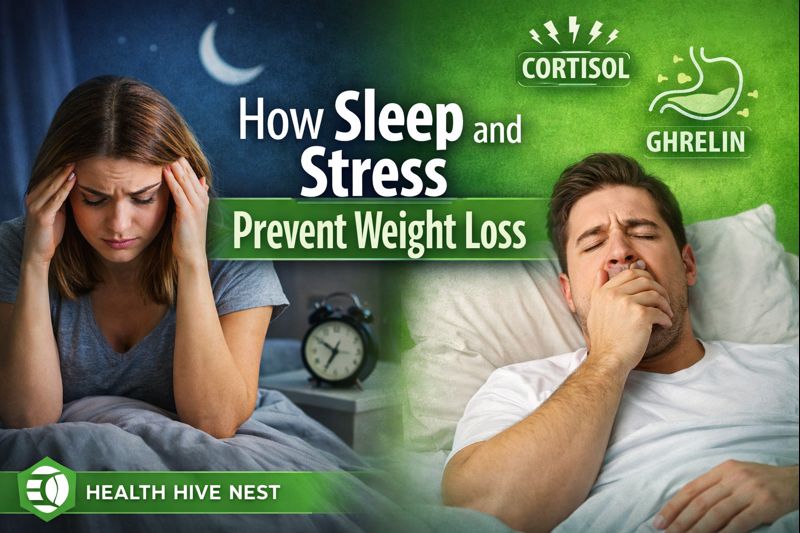
Understanding How Sleep and Stress Prevent Weight Loss – The Connection Between Sleep, Stress, and Weight Loss
Weight loss is not just about calories in and calories out. Hormones, brain chemistry, and nervous system responses play a critical role. Sleep deprivation and chronic stress disrupt these systems, leading to biological changes that favor weight gain rather than fat loss.
According to the National Institutes of Health (NIH), insufficient sleep and prolonged stress alter metabolic function and increase the risk of obesity and metabolic disorders.
(Source: NIH – Sleep Deprivation and Obesity: https://www.nih.gov)
Causes: How Sleep and Stress Prevent Weight Loss
Hormonal Imbalances
Poor sleep and chronic stress interfere with hormones that regulate hunger and fullness.
- Ghrelin (hunger hormone) increases with sleep deprivation
- Leptin (satiety hormone) decreases with poor sleep
- Cortisol (stress hormone) increases fat storage, especially around the abdomen
This hormonal imbalance makes you feel hungrier, crave high-calorie foods, and feel less satisfied after meals.
(Source: Mayo Clinic – Sleep and Weight Gain: https://www.mayoclinic.org)
Increased Appetite and Cravings
Sleep loss affects the brain’s reward centers, making sugary and high-fat foods more appealing.
Studies published in PubMed show that sleep-deprived individuals consume more calories, particularly from carbohydrates and processed foods.
(Source: PubMed – Sleep Restriction and Appetite: https://pubmed.ncbi.nlm.nih.gov)
Slower Metabolism
Sleep is essential for metabolic efficiency. When sleep is disrupted:
- Insulin sensitivity decreases
- Blood sugar regulation worsens
- Fat oxidation slows
These changes make it easier to store fat and harder to burn it.
(Source: CDC – Sleep and Metabolic Health: https://www.cdc.gov)
Emotional Eating and Stress
Chronic stress triggers emotional eating behaviors. Cortisol encourages the body to seek quick energy sources, often in the form of sugary or salty snacks.
Stress-related eating is a major contributor to weight gain and stalled weight loss.
(Source: American Psychological Association – Stress and Eating: https://www.apa.org)
Symptoms That Sleep and Stress Are Affecting Your Weight Loss
Many people fail to recognize these warning signs early.
Common Symptoms Include:
- Constant fatigue
- Difficulty falling or staying asleep
- Strong cravings for sweets or junk food
- Weight gain around the midsection
- Mood swings and irritability
- Low motivation for exercise
- Increased appetite despite eating enough
These symptoms often appear long before noticeable weight gain occurs.
(Source: NHS – Sleep Problems: https://www.nhs.uk)
Who Is Most at Risk?
Certain groups are more vulnerable to sleep and stress weight loss problems.
High-Risk Populations:
- Adults working long or irregular hours
- Parents of young children
- Shift workers
- People with high-stress jobs
- Individuals with anxiety or depression
- Adults over 40
According to the Sleep Foundation, adults in the U.S., UK, and Canada consistently report insufficient sleep, increasing obesity risk.
(Source: Sleep Foundation – Sleep Statistics: https://www.sleepfoundation.org)
Evidence-Based Solutions to Improve Sleep, Reduce Stress, and Support Weight Loss
Natural solutions can significantly improve weight loss outcomes when combined with healthy nutrition and physical activity.
Improve Sleep Quality
Sleep should be a priority, not an afterthought.
Evidence-based sleep strategies:
- Maintain a consistent sleep schedule
- Aim for 7–9 hours of sleep nightly
- Avoid screens at least one hour before bed
- Create a dark, quiet, cool sleep environment
The CDC emphasizes sleep as a critical component of weight management.
(Source: CDC – Sleep and Health: https://www.cdc.gov)
Manage Stress Effectively
Reducing stress lowers cortisol levels and improves fat metabolism.
Scientifically supported techniques:
- Mindfulness meditation
- Deep breathing exercises
- Progressive muscle relaxation
- Cognitive behavioral therapy (CBT)
(Source: National Institute of Mental Health – Stress Management: https://www.nimh.nih.gov)
Balance Nutrition to Support Hormones
Certain foods help stabilize blood sugar and reduce stress-related cravings.
Helpful nutrition strategies:
- Prioritize lean protein
- Include fiber-rich vegetables
- Avoid excessive refined sugar
- Eat regular, balanced meals
(Source: Harvard Health – Nutrition and Hormones: https://www.health.harvard.edu)
Exercise Without Overtraining
Exercise reduces stress, but excessive training can worsen cortisol levels.
Best practices:
- Combine strength training and moderate cardio
- Include rest days
- Avoid intense workouts when severely sleep-deprived
(Source: WHO – Physical Activity Guidelines: https://www.who.int)
Practice Evening Wind-Down Routines
Establishing a calming nighttime routine signals the brain to prepare for sleep.
Effective habits include:
- Reading
- Light stretching
- Journaling
- Limiting caffeine after noon
(Source: Sleep Foundation – Bedtime Routines: https://www.sleepfoundation.org)
When to See a Doctor
Lifestyle changes are powerful, but medical guidance is essential in some cases.
Seek medical advice if you experience:
- Persistent insomnia
- Extreme fatigue
- Rapid weight gain
- Symptoms of depression or anxiety
- Suspected sleep disorders such as sleep apnea
(Source: Mayo Clinic – Sleep Disorders: https://www.mayoclinic.org)
Preventive Care Tips for Long-Term Weight Success
Preventing sleep and stress problems is easier than correcting them later.
Preventive Strategies:
- Schedule regular sleep times
- Manage workload and boundaries
- Practice daily stress-reduction techniques
- Get routine health screenings
- Prioritize mental health
(Source: CDC – Preventive Health: https://www.cdc.gov)
4️⃣ Frequently Asked Questions (FAQ)
1. Can lack of sleep really prevent weight loss?
Yes. Sleep deprivation disrupts hormones that control appetite and fat storage.
(Source: NIH)
2. How much sleep is needed for weight loss?
Most adults need 7–9 hours per night.
(Source: Sleep Foundation)
3. Does stress cause belly fat?
Chronic stress raises cortisol, which promotes abdominal fat storage.
(Source: Mayo Clinic)
4. Can stress make dieting harder?
Yes. Stress increases cravings and emotional eating.
(Source: APA)
5. Will improving sleep help me lose weight?
Better sleep improves metabolism and appetite regulation.
(Source: CDC)
6. Is exercise enough to offset poor sleep?
No. Exercise cannot fully counteract hormonal disruption from poor sleep.
(Source: NIH)
7. Can meditation help with weight loss?
Yes. Meditation lowers stress hormones and improves eating behavior.
(Source: NIMH)
8. Are sleep supplements necessary?
Not usually. Behavioral changes are preferred unless prescribed.
(Source: Mayo Clinic)
9. How long does it take to see results?
Many people notice improved energy and appetite within 1–2 weeks of better sleep.
10. Should I talk to a doctor about sleep issues?
Yes, especially if sleep problems persist or affect daily functioning.
Medical Disclaimer:
The information provided in this article is for educational purposes only and should not be used as a substitute for professional medical advice. Always consult a qualified healthcare provider regarding sleep disorders, stress management, or weight loss concerns.