
Holding a baby seems simple—yet it’s one of the most important skills a new parent or caregiver must master. How to hold a baby correctly by Health Hive Nest explains New-borns and young infants have weak neck muscles and a large, heavy head relative to their body. Without proper support, a baby’s head can flop unnaturally, increasing the risk of injury and discomfort. (Healthline)
In this expert-informed guide, we break down safe and trusted ways to hold a baby, based on pediatric guidelines and health resources, as well as essential safety tips and answers to the questions most caregivers ask.
Why Proper Holding Matters
Newborns typically cannot support their head or neck for the first few months of life. Most babies begin to gain head control between 2–3 months, with stronger independent head holding around 4 months, though this varies by child. (Verywell Family)
Supporting the head and neck isn’t just about comfort—it’s about preventing potential injury and helping with feeding, digestion, and emotional security.
Safe Baby Holding Positions (With Evidence)
Here are commonly recommended and safe ways to hold a baby, supported by reputable health sources:
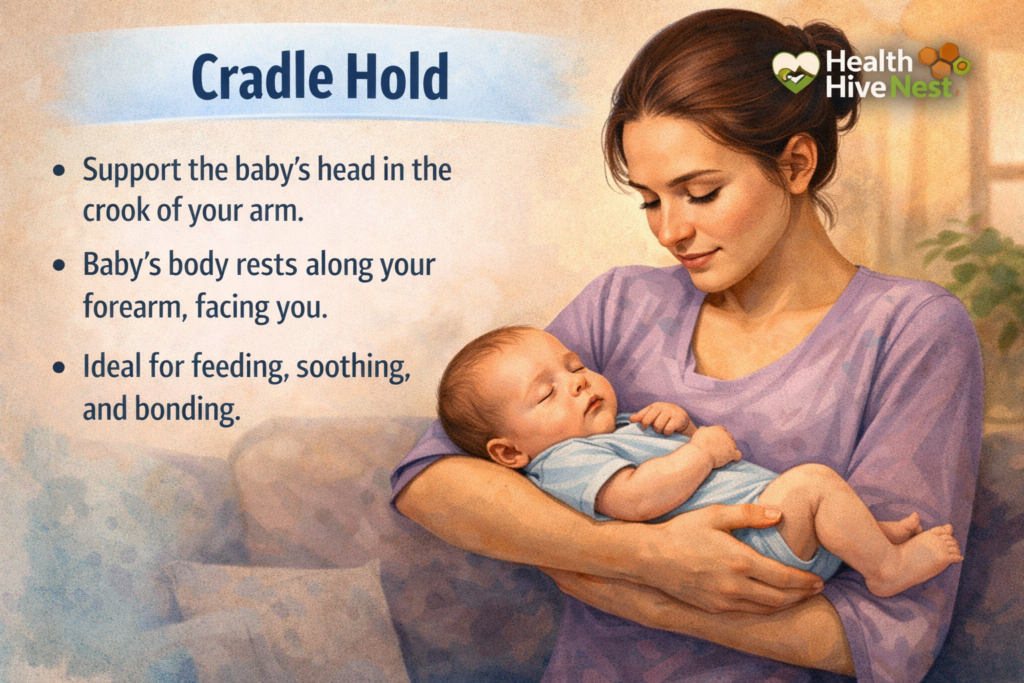
1. Cradle Hold
Best for: Feeding, bonding, soothing
- Position the baby’s head in the crook of your arm with the body resting along your forearm.
- Use your free hand to support the bottom and back.
This is one of the most recommended holds for newborns. (Healthline)
Why it’s safe: The head, neck, and body are fully supported, reducing strain and allowing eye contact.
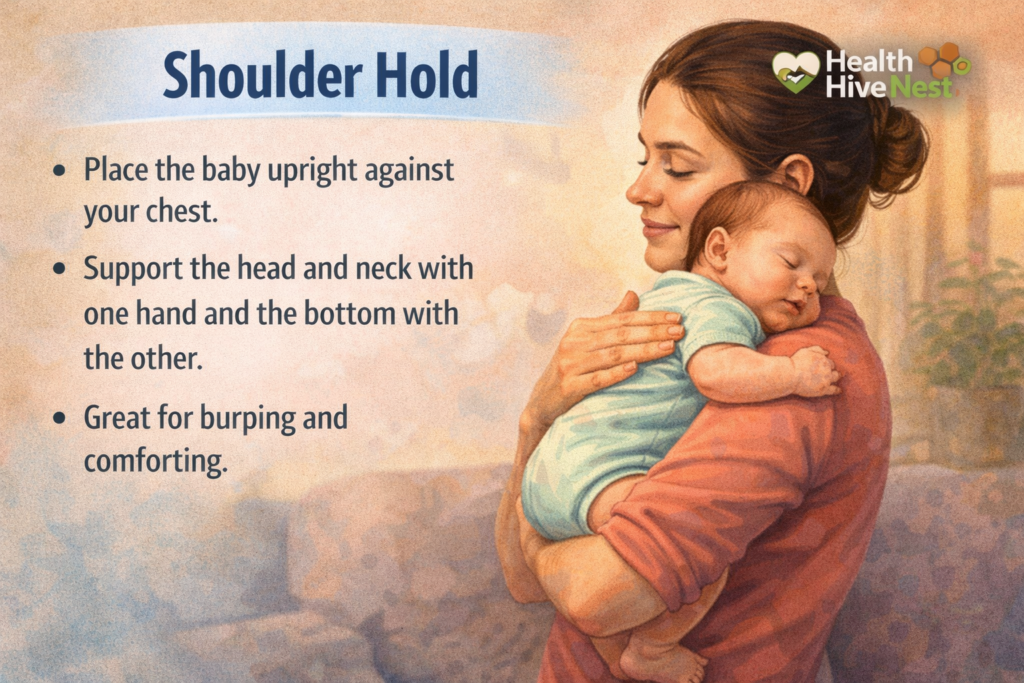
2. Shoulder Hold
Best for: Comforting, burping
- Hold the baby upright against your chest.
- Support the head and neck with one hand and the bottom with the other.
Health sources highlight this as a safe, secure position for burping and calming. (Healthline)
Pro Tip: Hearing your heartbeat and feeling your breath can soothe a fussy infant.
3. Football (Clutch) Hold
Best for: Breastfeeding, babies with reflux
- Tuck the baby under your arm like a football.
- Support the head with your hand and the body along your forearm.
This hold is often recommended for breastfeeding moms, especially after a C-section, or for babies who prefer more upright positions. (GovInfo)
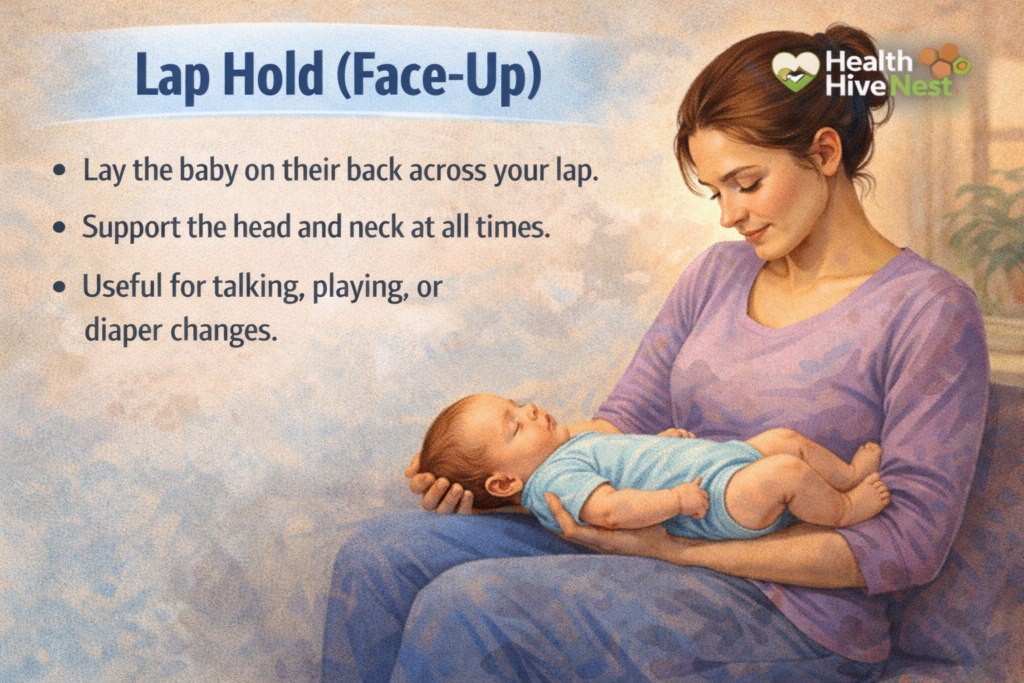
4. Lap Hold (Face-Up)
Best for: Talking, diaper changes
- Lay the baby on their back across your lap.
- Support the head and neck constantly.
This position is great for interaction and routine care. (The Bump)
5. Upright Hold (Chest-to-Chest)
Best for: Digestion, calming fussy babies
- Place your baby vertically against your chest.
- Support head and bottom with both hands.
Useful after feedings or when the baby needs extra reassurance. (Healthline)
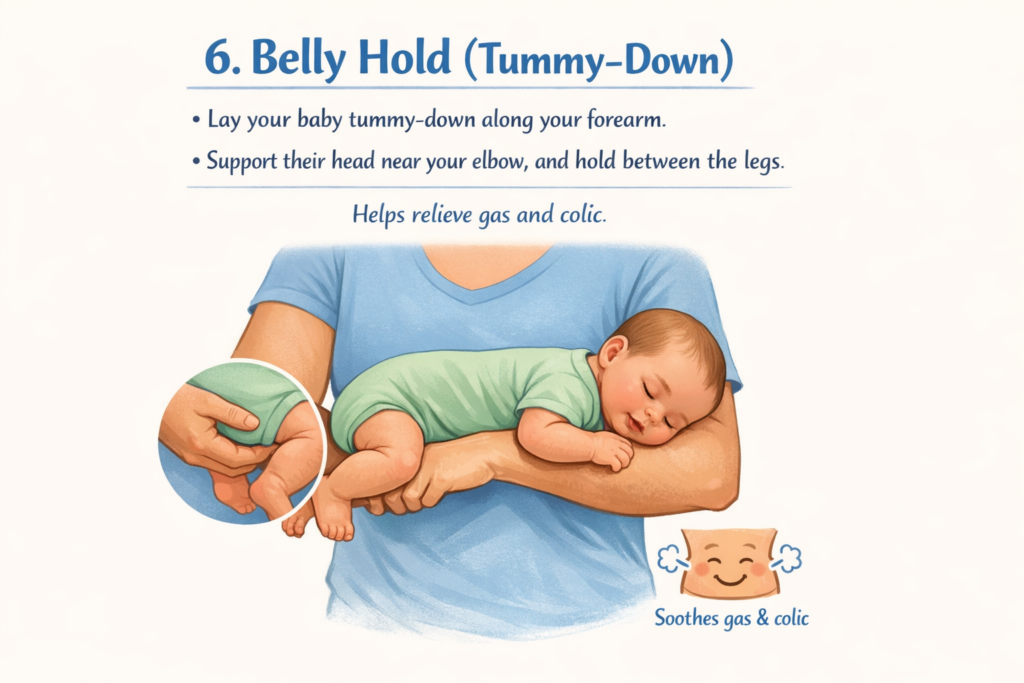
6. Belly Hold (Tummy-Down)
Best for: Gas relief and burping
- Lay the baby tummy-down across your forearm.
- Support the head near your elbow and steady the body.
This gentle position can help relieve gas and fussiness. (The Bump)
Important Safety Tips on How to Hold a Baby Correctly
- Always support the head and neck. Newborns can’t control it themselves. (Healthline)
- Use both hands to lift your baby. Place one under the head and one under the bottom before lifting. (Raising Children Network)
- Avoid lifting from under the arms alone—this can strain joints and leave the neck unsupported. (UT Southwestern Medical Center)
- Stay focused. Don’t multitask (e.g., carrying hot drinks) while holding your baby. (Web-Pampers-US-EN)
- Handle gently. Never shake a baby—even playfully—as it can cause serious brain injury. (Web-Pampers-US-EN)
What Pediatricians Say About Head Support
Pediatric experts emphasize that a newborn’s head is disproportionately heavy compared to their body, making constant support essential until neck muscles are stronger. Most infants begin to show consistent head control around 4 months of age. (Verywell Family)
Frequently Asked Questions (FAQ – How to Hold a Baby Correctly)
Q: When can my baby hold their head up on their own?
Most babies begin to gain head control between 2–4 months, with stronger independent head holding closer to 4 months. (Verywell Family)
Q: Can I use a baby carrier instead of holding manually?
Yes—but ensure the carrier supports the baby’s head and airway. Always follow manufacturer instructions and consult your pediatrician, especially for premature infants. (BabyGearLab)
Q: Is it okay to hold a baby upright after feeding?
Yes. Upright positions like the shoulder or chest-to-chest hold can aid digestion and reduce reflux symptoms. (Healthline)
Q: What if my baby doesn’t like being held in one position?
Every baby is different. Try multiple safe holds to see which one helps your baby feel comfortable and secure. (Raising Children Network)
Final Thoughts
Holding your baby safely isn’t just about comfort—it promotes healthy development, supports digestion, reduces fussiness, and builds emotional connection. With the right techniques and awareness of safety guidelines, you can confidently care for your little one every day.