
Why Better Sleep Starts in the Morning
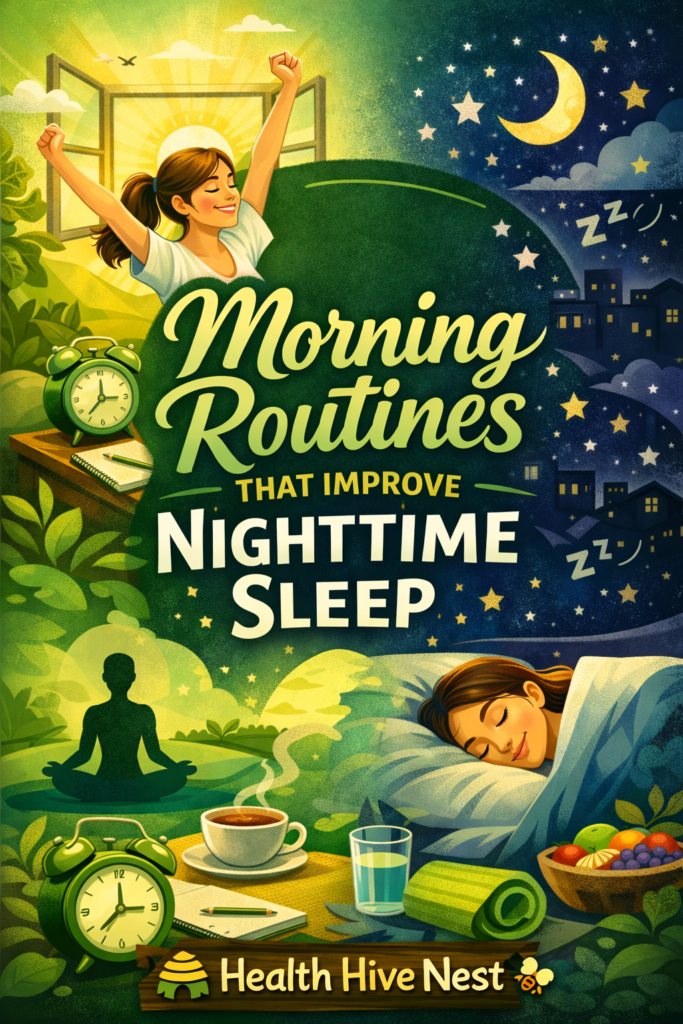
Most people think better sleep begins at night. They focus on bedtime routines, dimming lights, or cutting screen time before bed. While those habits matter, they tell only half the story. In reality, morning routines that improve nighttime sleep often play an even bigger role in how well you rest.
Your body does not decide how to sleep when your head hits the pillow. It has been collecting signals all day—light exposure, movement, meals, stress levels, and timing cues. Morning habits are especially powerful because they set your internal clock for the entire day.
If you’ve ever wondered why you feel wired at night even after a calm evening, the answer may lie in how your day begins. This article explains how morning routines influence sleep, what science says about circadian rhythm alignment, and how simple, realistic habits can help you fall asleep faster and sleep more deeply—naturally.

Understanding the Body’s Internal Clock
Sleep is governed by the circadian rhythm, a 24-hour internal clock that regulates sleep, alertness, hormones, digestion, and body temperature.
According to the National Institute of General Medical Sciences, light exposure and daily routines are the strongest signals that keep this clock aligned.
https://www.nigms.nih.gov
Morning behaviors send the “start of day” signal to the brain. When this signal is clear and consistent, the body knows when to wind down later.
Why Morning Habits Matter More Than You Think
Morning routines influence nighttime sleep by:
- Anchoring your circadian rhythm
- Regulating melatonin release
- Supporting cortisol balance
- Improving sleep drive by night
When mornings are chaotic, inconsistent, or spent entirely indoors, the brain struggles to determine when day ends and night begins.
This confusion often shows up as:
- Difficulty falling asleep
- Light or fragmented sleep
- Feeling tired but wired at night
Waking Up at a Consistent Time
The Power of a Fixed Wake-Up Time
Waking up at the same time every day—even on weekends—is one of the most effective morning routines that improve nighttime sleep.
A consistent wake time:
- Stabilizes circadian rhythm
- Improves melatonin timing
- Reduces nighttime awakenings
The Sleep Foundation emphasizes that regular wake times matter more than bedtime consistency.
https://www.sleepfoundation.org
Why Sleeping In Can Backfire
Sleeping in disrupts sleep pressure, making it harder to fall asleep later.
Even an extra hour or two can delay nighttime sleepiness, especially for people prone to insomnia.
Morning Light Exposure: A Non-Negotiable Habit
Why Sunlight Is Essential
Morning light is the strongest cue for resetting the body clock.
Sunlight:
- Suppresses melatonin
- Boosts alertness
- Signals the start of the day
The NIH confirms that morning light exposure improves sleep timing and quality.
https://www.nhlbi.nih.gov
How Much Light Do You Need?
Ideally:
- 20–30 minutes outdoors
- Within the first hour of waking
Even on cloudy days, outdoor light is far stronger than indoor lighting.
Real-Life Example
Someone who wakes up and scrolls on their phone in bed may feel groggy all morning and wired at night. Someone who steps outside, opens curtains, or takes a short walk often feels more alert during the day and sleepier at night.
Moving Your Body Early in the Day
Morning Movement and Sleep
Physical activity in the morning or early afternoon improves sleep quality by:
- Increasing sleep pressure
- Reducing stress hormones
- Supporting circadian alignment
The American Psychological Association links regular exercise to better sleep quality.
https://www.apa.org
What Counts as Morning Movement?
You do not need intense workouts.
Effective options include:
- Walking
- Stretching
- Yoga
- Light strength training
Consistency matters more than intensity.
Why Late-Night Exercise Can Be Tricky
While exercise is healthy, intense workouts late at night may increase alertness for some people. Morning movement avoids this risk.
Eating Breakfast to Support Sleep Later
How Morning Meals Affect Sleep
Breakfast helps anchor metabolic rhythms, which are closely tied to sleep timing.
Eating earlier in the day:
- Regulates blood sugar
- Supports hormone balance
- Reduces late-night hunger
The Mayo Clinic notes that irregular eating patterns can disrupt sleep.
https://www.mayoclinic.org
Balanced Breakfast Components
A sleep-supportive breakfast includes:
- Protein for steady energy
- Fiber for digestion
- Healthy fats for satiety
Skipping breakfast may delay circadian signals, contributing to late-night wakefulness.
Managing Morning Stress Levels
Why Stress in the Morning Carries Into the Night
High stress early in the day keeps cortisol elevated longer than necessary.
Chronic cortisol elevation:
- Delays melatonin release
- Increases nighttime alertness
- Disrupts sleep depth
Simple Morning Stress-Reduction Practices
Helpful habits include:
- Deep breathing
- Gratitude reflection
- Setting realistic daily goals
- Avoiding negative news immediately after waking
These small practices shape emotional regulation throughout the day.
Caffeine Timing and Sleep Quality
When You Drink Caffeine Matters
Caffeine has a long half-life, remaining active for hours.
The CDC warns that late caffeine intake disrupts sleep onset.
https://www.cdc.gov/sleep
Morning-Only Caffeine Rule
To protect nighttime sleep:
- Consume caffeine earlier in the day
- Avoid caffeine after early afternoon
This simple rule supports better evening wind-down.
Technology Habits in the Morning
Avoiding Immediate Screen Overload
Checking emails or social media immediately after waking can spike stress levels.
This mental stimulation sets a reactive tone that lingers into the night.
Healthier Morning Tech Use
Consider:
- Delaying notifications
- Avoiding work emails early
- Prioritizing light exposure first
Morning calm supports nighttime rest.
Exposure to Natural Rhythms
Temperature, Light, and Activity
Morning exposure to:
- Daylight
- Movement
- Normal household noise
helps reinforce the brain’s sense of daytime, strengthening nighttime sleep signals.
Structuring the Day to Support Sleep
Daytime Focus Improves Nighttime Rest
People who feel productive and mentally engaged during the day often sleep better at night.
Unstructured days may reduce sleep pressure, making rest harder.
Breaks and Balance
Taking regular breaks prevents burnout and emotional exhaustion, which can interfere with sleep.
Preventive Care: Protecting Sleep Through Daily Habits
Consistency Over Perfection
Sleep-supportive routines do not require perfection.
Small, consistent actions compound over time.
Listening to Your Body
Signs that morning routines may need adjustment include:
- Evening restlessness
- Difficulty falling asleep
- Daytime fatigue
Early adjustments prevent long-term sleep issues.
When Morning Routines Are Not Enough
Sometimes sleep problems persist despite healthy habits.
Medical evaluation is recommended if:
- Insomnia lasts several months
- Daytime sleepiness is severe
- Mood or mental health declines
- Snoring or breathing issues occur
The NHS encourages early evaluation for persistent sleep problems.
https://www.nhs.uk
When to Seek Professional Help
Seek medical advice if:
- Sleep problems interfere with daily life
- Anxiety or depression worsens
- Sleep habits no longer improve symptoms
Sleep disorders may require targeted treatment.
Frequently Asked Questions (FAQs)
1. Can morning routines really improve nighttime sleep?
Yes. Morning habits strongly influence circadian rhythm.
2. Is waking up early necessary for better sleep?
No. Consistency matters more than early timing.
3. How soon does morning light affect sleep?
Benefits may appear within days.
4. Does skipping breakfast affect sleep?
It can disrupt metabolic rhythms linked to sleep.
5. Is morning exercise better than evening exercise?
For some people, yes—especially those with insomnia.
6. How much sunlight is enough in the morning?
About 20–30 minutes outdoors.
7. Can morning stress ruin nighttime sleep?
Chronic stress early in the day can affect sleep.
8. Does caffeine timing really matter?
Yes. Late caffeine delays sleep onset.
9. Should I check my phone first thing in the morning?
Delaying screens supports calmer days and better sleep.
10. When should I seek help for sleep issues?
When problems persist or worsen despite habit changes.
Conclusion: Better Nights Are Built One Morning at a Time
Morning routines that improve nighttime sleep are not complicated or extreme. They are simple, consistent signals that tell your body when to wake, when to focus, and when to rest.
By prioritizing light exposure, movement, nourishment, and calm in the morning, you create the conditions for deeper, more restorative sleep at night.
Sleep does not start at bedtime—it starts when your day begins.
If this article helped you rethink how mornings shape your sleep, share it with someone who struggles at night, and subscribe to Health Hive Nest for evidence-based guidance on building healthier daily routines for long-term wellness.