
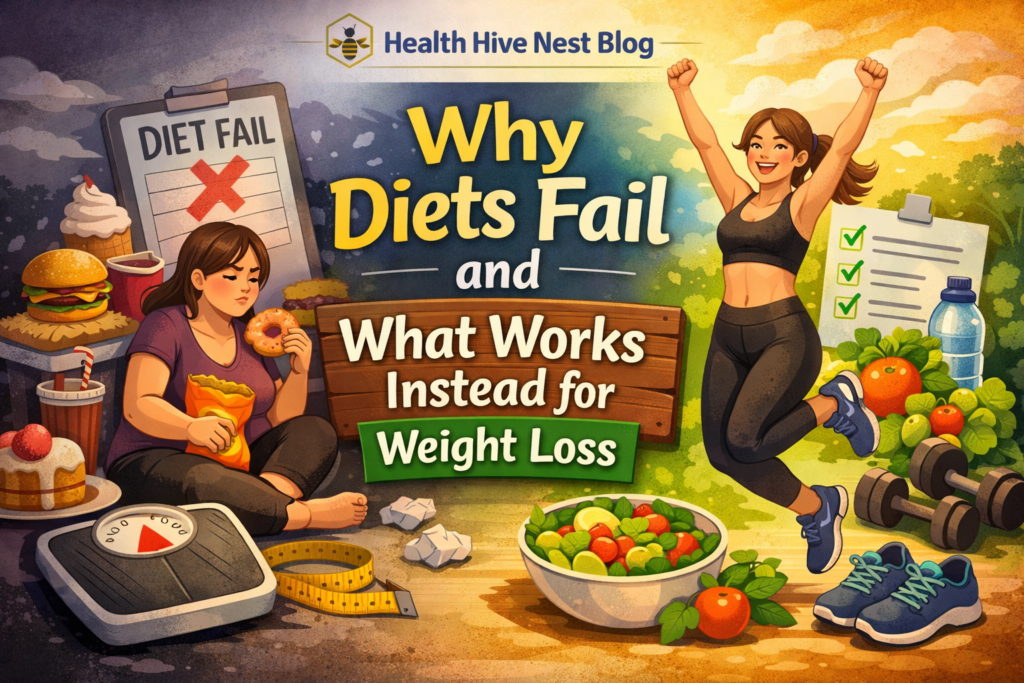
Why diets fail and what works instead is a question many people ask after years of trying meal plans, detoxes, and strict food rules that never seem to last. At first, the diet works. The scale goes down. Compliments come in. Motivation feels high. Then hunger increases, energy drops, life gets busy, and slowly the weight returns.
This isn’t because people lack discipline. It’s because most diets are built on short-term control rather than long-term human behavior. They ignore biology, psychology, culture, stress, and real life. This article explains clearly why diets fail, what actually works instead, and how to approach weight loss in a way that is realistic, sustainable, and supported by science.
Everything here is written to be simple, practical, and easy to apply—especially if you’ve felt stuck, discouraged, or tired of starting over.
What Most Diets Have in Common
Most diets look different on the surface, but underneath, they follow the same pattern. That pattern is the reason they fail.
Extreme restriction
Most diets require cutting calories too low or eliminating entire food groups. This includes:
- Very low-calorie meal plans
- No-carb or no-fat diets
- Juice cleanses and detoxes
- Highly rigid meal timing rules
Restriction creates short-term results but long-term problems.
When food becomes limited, the brain reacts with urgency. Hunger hormones rise. Cravings intensify. Eventually, the body pushes back.
Short-term focus
Most diets are designed to help you lose weight quickly, not maintain it.
They focus on:
- Fast results
- Scale weight only
- Temporary rules
They rarely teach:
- How to eat normally afterward
- How to handle holidays, stress, or social events
- How to maintain weight long term
Once the diet ends, there is no structure left to support the results.
One-size-fits-all rules
Diets often assume everyone responds the same way to food. This ignores:
- Different metabolisms
- Medical conditions
- Cultural eating habits
- Work schedules and lifestyles
When a plan doesn’t fit your life, it won’t last.
The Biological Reasons Diets Fail
Weight loss is not just about willpower. It is strongly influenced by biology.
Hunger hormones increase
When calorie intake drops too low, the body increases ghrelin, the hormone that stimulates hunger. At the same time, leptin, the hormone that signals fullness, decreases.
This leads to:
- Constant thoughts about food
- Feeling hungry even after eating
- Strong cravings for high-calorie foods
This response is the body trying to survive, not sabotage.
Metabolism adapts
The body adjusts to prolonged calorie restriction by burning fewer calories. This is called metabolic adaptation.
What this means in real life:
- Weight loss slows over time
- The same diet stops working
- Maintaining weight becomes harder
This effect is well documented by the National Institutes of Health.
Muscle loss occurs
Many diets cause muscle loss because:
- Protein intake is too low
- Calories are too restricted
- Strength training is ignored
Muscle helps regulate metabolism. Losing it makes weight regain more likely.
The Psychological Reasons Diets Fail
Even if biology didn’t matter, psychology alone would still cause most diets to fail.
All-or-nothing thinking
Diets create strict rules. You’re either “on the diet” or “off the diet.”
This leads to thoughts like:
- “I already messed up, so it doesn’t matter now.”
- “I’ll start again on Monday.”
- “I failed.”
One small slip turns into quitting entirely.
Food guilt and shame
Labeling foods as “bad” creates guilt when those foods are eaten.
Guilt often leads to:
- Emotional eating
- Secretive eating
- Loss of trust in yourself
Over time, food becomes stressful instead of nourishing.
Disconnection from hunger cues
Diets often tell you:
- When to eat
- What to eat
- How much to eat
But they don’t teach you how to listen to your body.
Eventually, people lose the ability to recognize:
- True hunger
- Comfortable fullness
- Satisfaction
When the diet ends, eating feels confusing and out of control.
Why Diets Seem to Work at First
Understanding why diets feel successful early on helps explain why they fail later.
Early weight loss is often water weight
Reducing calories or carbohydrates quickly depletes glycogen, which holds water. This causes a rapid drop on the scale.
This is not fat loss.
When normal eating resumes, the water returns, creating frustration.
Motivation is temporarily high
New diets come with hope. Hope increases effort and consistency.
But motivation fades. When it does, rigid rules collapse because they were never designed to function without constant effort.
Why Diets Fail Long Term
When you combine biology and psychology, the outcome becomes predictable.
Over time:
- Hunger increases
- Energy decreases
- Stress rises
- Cravings intensify
- Consistency breaks
The diet ends. Weight returns. Often more than before.
This cycle is not a personal failure. It’s a system failure.
What Works Instead of Dieting
Now we move to solutions that actually last.
A moderate calorie deficit
Weight loss still requires a calorie deficit, but not an extreme one.
What works better:
- Small, consistent reductions
- Eating enough to feel satisfied
- Avoiding hunger extremes
This approach supports fat loss without triggering survival responses.
The CDC recommends gradual weight loss for long-term success.
https://www.cdc.gov/healthyweight/losing_weight
Focusing on food quality, not perfection
Instead of cutting foods out completely, successful approaches focus on balance.
Helpful priorities include:
- Lean protein at most meals
- High-fiber vegetables and fruits
- Whole grains instead of refined ones
- Healthy fats in reasonable amounts
No food needs to be completely forbidden.
Protein as a foundation
Protein helps regulate appetite and preserve muscle.
Benefits include:
- Feeling full longer
- Reduced cravings
- Better body composition
The Mayo Clinic supports higher-protein diets for weight management.
Fiber for fullness and gut health
Fiber slows digestion and stabilizes blood sugar.
Good sources include:
- Vegetables
- Beans and lentils
- Fruits with skin
- Whole grains
High-fiber diets are linked to better long-term weight control by the WHO.
Movement That Supports Weight Loss
Exercise should support your life, not punish your body.
Strength training
Strength training helps:
- Preserve muscle
- Improve metabolism
- Shape the body
It doesn’t require a gym. Bodyweight exercises work.
Walking and daily activity
Walking is one of the most sustainable forms of movement.
Benefits include:
- Low stress
- Easy recovery
- High consistency
Daily movement matters more than intense workouts.
Enjoyable cardio
Cardio should be something you can maintain.
Options include:
- Cycling
- Swimming
- Dancing
- Light jogging
Enjoyment increases consistency.
Sleep and Stress Matter More Than You Think
Sleep affects hunger hormones
Poor sleep increases hunger and cravings.
The CDC links short sleep duration to higher obesity risk.
Chronic stress promotes fat storage
High stress increases cortisol, which encourages fat storage, especially around the abdomen.
Stress management is not optional for sustainable weight loss.
Helpful tools include:
- Walking outdoors
- Deep breathing
- Stretching
- Reducing screen time
Preventive Care and Long-Term Success
Preventive care supports both weight and overall health.
Helpful steps include:
- Regular health checkups
- Monitoring blood pressure and blood sugar
- Addressing emotional eating early
- Staying hydrated
Small actions add up over time.
When to See a Doctor
You should consult a healthcare professional if:
- Weight changes are sudden or unexplained
- You feel constantly fatigued or dizzy
- You have diabetes, thyroid conditions, or PCOS
- You’re considering supplements or medications
The NHS recommends medical guidance for complex weight concerns.
Frequently Asked Questions
Why do diets fail even when I follow them?
Most diets fail because they rely on restriction and ignore biology, psychology, and long-term behavior.
Is willpower the problem?
No. Hunger hormones and metabolic adaptation overpower willpower over time.
What works instead of dieting?
Moderate calorie deficits, balanced nutrition, strength training, daily movement, and stress management.
How fast should I lose weight?
About 0.5 to 1 pound per week is considered safe and sustainable.
Do I need to cut carbs to lose weight?
No. Whole carbohydrates can be part of a healthy weight loss plan.
Is exercise required for weight loss?
Not strictly, but it greatly improves health and long-term success.
Why do I regain weight after dieting?
Restriction increases hunger, slows metabolism, and leads to rebound eating.
Are weight loss supplements effective?
Most are not regulated and should be avoided without medical advice.
Does sleep really affect weight?
Yes. Poor sleep disrupts hunger hormones and increases cravings.
Can stress stop weight loss?
Yes. Chronic stress raises cortisol, which promotes fat storage.
Conclusion
Why diets fail and what works instead becomes clear when you stop blaming yourself and start understanding how the body actually works. Diets fail because they demand perfection, ignore biology, and collapse under real life. What works instead is consistency, balance, and habits that fit into your daily routine.
Sustainable weight loss is not dramatic. It’s steady. It feels calmer. It respects your body instead of fighting it.
If this article helped you see weight loss differently, share it with someone who feels stuck in the diet cycle. Subscribe to Health Hive Nest for clear, evidence-based health guidance you can trust. Small changes, done consistently, truly work.